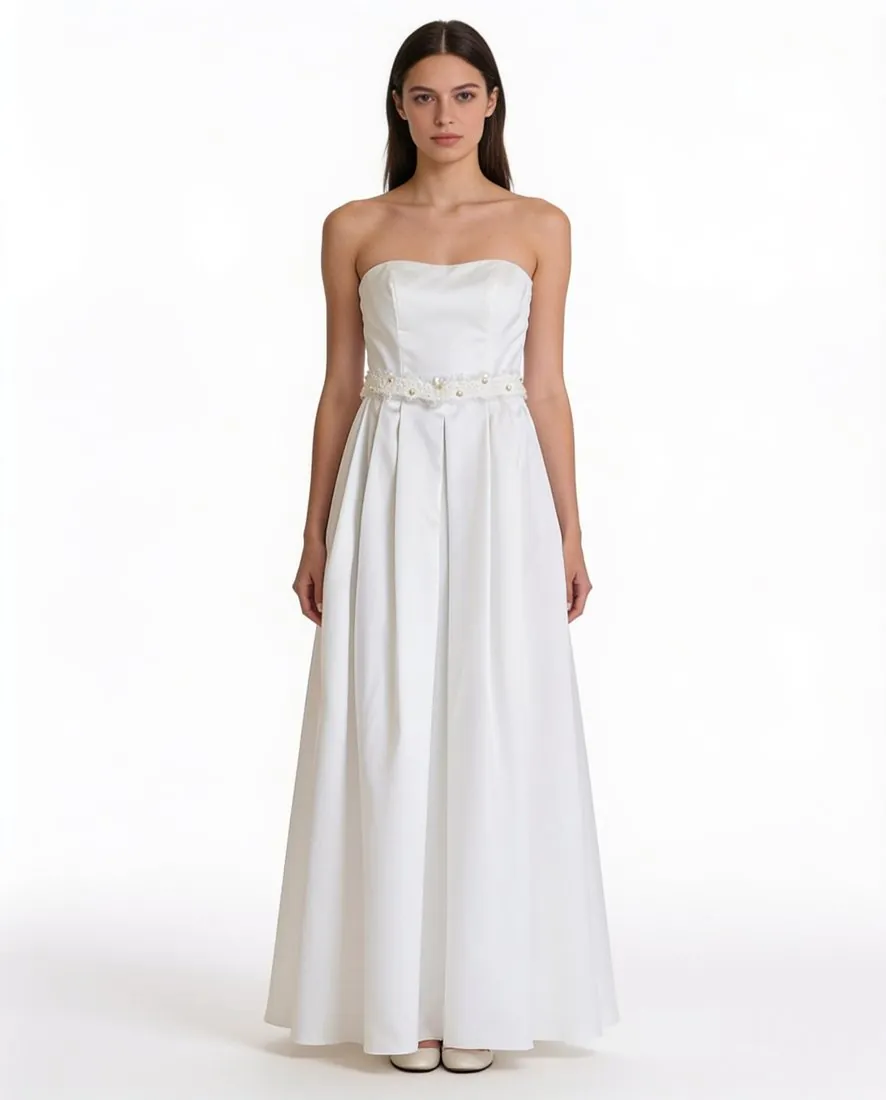
How do AI models and real models compare?
AI models cost less and scale faster, while real models show true fit and bring a person the audience can trust. The table sets the two side by side; prices are US rates read on 31 October 2026.
| Factor | Real model | AI model |
|---|---|---|
| Cost | Model from $400 half day or $1,000 full day, on top of the studio (Shootify) | Cents per image; $0.20–$0.60 on Herofab Virtual try-on |
| Speed | Booking first, then about 9–11 business days for images and retouching (Shootify's stated times) | Same batch, once the source photos exist, plus review |
| Range of looks | Each extra age, size or look is another booking | Chosen by description, but that is not real representation |
| Fit evidence | Shows the garment on a real body | Shows a plausible fit, not proof |
| Product accuracy | The camera records the item | The item is redrawn, so each image needs checking |
| Consistency across a catalogue | Depends on availability and hair, make-up and light on the day | A saved model can be reused, though details can drift |
| Consent | Model release and usage terms | No real person to sign a release, but a resemblance to a real person remains a risk; written consent for any real likeness |
| Disclosure | No AI disclosure | Required in some cases, such as New York adverts with synthetic performers |
| Brand risk | Low on this count | Criticism where shoppers feel misled or real models lose work |
| Copyright | Set by the shoot contract | May be limited for AI images in some countries |
Create a reusable synthetic studio model
How much does a real model cost compared with an AI model?
A real model costs hundreds to thousands of dollars per booking, and an AI model costs cents per image. One Miami studio's rate card, read on 31 October 2026, lists non-agency models from $400 for a half day or $1,000 for a full day, and agency models from $600 or $1,200, billed separately from the studio day. A US agency's rate card lists $2,400 for an e-commerce day: $2,000 with two years of use, plus a 20% agency fee.
The studio adds more: that same card lists an on-model half day at $1,800 for up to 25 items, with retouching at $8 per photo. A half-day booking with a non-agency model therefore starts at $2,200 before retouching.
These are client prices, not what the model earns. US Bureau of Labor Statistics data on the Department of Labor's O*NET site put the median wage for models at $23.30 an hour in 2025. The guide to fashion shoot costs covers the breakdown in full.
An AI model carries its own costs: source photos of each product, and the time to compare each image with the item.
Will AI replace fashion models?
AI is taking some fashion modelling work, mainly routine e-commerce shoots, but the evidence so far points to fewer bookings rather than the end of the job. The same O*NET data show about 4,200 model jobs in 2025, a projected decline of 1% or more by 2035, and 700 projected job openings from growth and replacement.
Reuters reported in October 2026 that modelling agencies are seeing bookings decline. London model Adot Gak told Reuters: "there's going to be less jobs for models, especially our bread and butter, which is ecommerce."
Brands are also testing a middle route. H&M said in April 2025 that it planned 30 digital twins of its models, and that the models would own the rights to them, while Equity's general secretary said such promises need backing in union agreements and legislation.
Not every brand is moving at the same pace. Levi's said in 2023 that its AI pilot would supplement human models and, after criticism, confirmed its plans for live shoots. The agency behind the 2025 Guess advert in Vogue said it aimed to "supplement and to add", not to replace models, although critics argued that models and photographers could lose work.
Is it ethical to use AI models instead of real models?
Using AI models raises fewer questions when no real person's likeness is taken and shoppers are not misled, and three situations need separate answers.
A fully synthetic person: nobody's likeness is copied, although the work that a real model might have had is gone. Brands should expect that argument, and decide their position before it arises.
A digital replica of a real model: consent is the central duty. New York's Fashion Workers Act, in force since 19 June 2025, requires clients to obtain clear written approval before creating or using a model's digital replica. The approval must state the scope, purpose, rate of pay and length of use, and a new campaign outside it needs new approval.
Reused or altered shoot images: Reuters reported in October 2026, after reviewing more than a dozen confidential contracts, that some contracts sought broad rights to modify or replicate models. The head of the British Fashion Model Agents Association told Reuters that models still risk being taken advantage of without binding rules in Britain or Europe; the association's code says AI needs the model's consent and that the model would own any digital twin.
Disclosure is a separate duty. New York law S.8420-A, in force from June 2026, requires a conspicuous disclosure of a synthetic performer in an advert, where the advertiser has actual knowledge of it, with civil penalties of $1,000 and then $5,000. Rules differ by country and platform, and the 2026 rules guide sets them out. This page is a summary, not legal advice.
Check whether a file carries an AI label
Do AI models improve diversity in fashion imagery?
AI models can widen the range of bodies and ages on a product page, but they do not count as hiring diverse people, and they do not prove fit on those bodies. Levi's learned this in 2023: after announcing a pilot partly framed around diversity, it said AI models were not a "means to advance diversity" or "a substitute for the real action" needed on its goals, and that the partnership "should not have been conflated" with its diversity commitment.
The practical value is showing more of a range. Baymard's apparel testing (2020) treated multiple models of different sizes as an enhancement rather than a necessity, noting that no test users were put off by a lack of diversity in body types. That study is older than current tools, and it measured usability, not brand perception.
An image on an AI plus-size model shows how the garment might look, not how the size was cut. A brand claiming inclusive sizing should back that claim with real fit testing, and should avoid presenting AI imagery as evidence of inclusion.
AI product photos for plus-size brands
How do shoppers react to AI models?
Shopper reactions to AI models are mixed, and fit is the main worry. In a survey of 411 shoppers published by Stylitics and Aha Studio (a vendor study, undated), 76% called on-model photos the most useful format, 60% were neutral or positive on learning that images were AI-generated, and 31% were negative.
Among shoppers who knew a virtual model was used, 37% said they would be more careful about sizing, and 30% expected they might have to return the item. These are stated expectations, not measured returns. No independent return-rate data was found as of October 2026.
When should a clothing brand choose a real model?
A clothing brand should choose a real model when the image has to prove fit, carry the brand or feature a person the audience recognises. Campaign images, first collections, tailored or hard-to-fit items, and any brand built on community or real customers all belong here.
A real model is also the safer choice where the audience is sensitive to AI, or where a brand's promise rests on authenticity. Children's clothing needs particular care with any AI approach, and the legal position should be checked first.
When is an AI model the better choice?
An AI model is the better choice for routine catalogue views, where the cost of a shoot would otherwise mean no on-model image at all. For a small brand, the alternative to an AI model is often a flat lay, not a real model.
It also suits catalogues with frequent drops, wide colour ranges and repeat framing, where one model has to appear consistently across many products. Many brands will keep a real model for hero images and use an AI model for the rest. The guide on replacing a photoshoot lists which shots belong on each side.
Keep one consistent AI model across a brand
Checklist
- Decide which images must prove fit; those stay with a real model.
- Price one real booking in full: model, studio and retouching.
- Use only fictional AI people, or get written consent for any real likeness.
- Avoid presenting AI imagery as proof of inclusive sizing.
- Check each AI image against the real garment.
- Keep AI markers in the file and check the disclosure rules for each market.
Sources
- Shootify: Product photography prices
- Human Models: Rates and booking policies
- O*NET OnLine, US Department of Labor: Models (BLS 2025 wage data and 2025–35 projections)
- Reuters via iTnews: Fashion's AI era, face swaps and digital clones (27 October 2026)
- CNN via ABC7: H&M plans to use AI clones of its human models (1 April 2025)
- New York State Department of Labor: Fashion Workers Act FAQs
- New York State Department of Labor: Duties of model management companies and clients
- New York State Senate: Bill S8420A
- Silicon Canals: Levi Strauss clarifies its use of Lalaland's AI models (31 March 2023)
- Frankfurt Kurnit: Diverse AI fashion models take criticism (15 April 2023)
- Good Morning America: AI-generated models in Guess ads in Vogue (1 August 2025)
- Baymard Institute: Human model images in apparel (1 December 2020)
- Stylitics and Aha Studio: AI fashion photography survey (undated)
Checked 31 October 2026. Rules change; the official pages are the final reference.