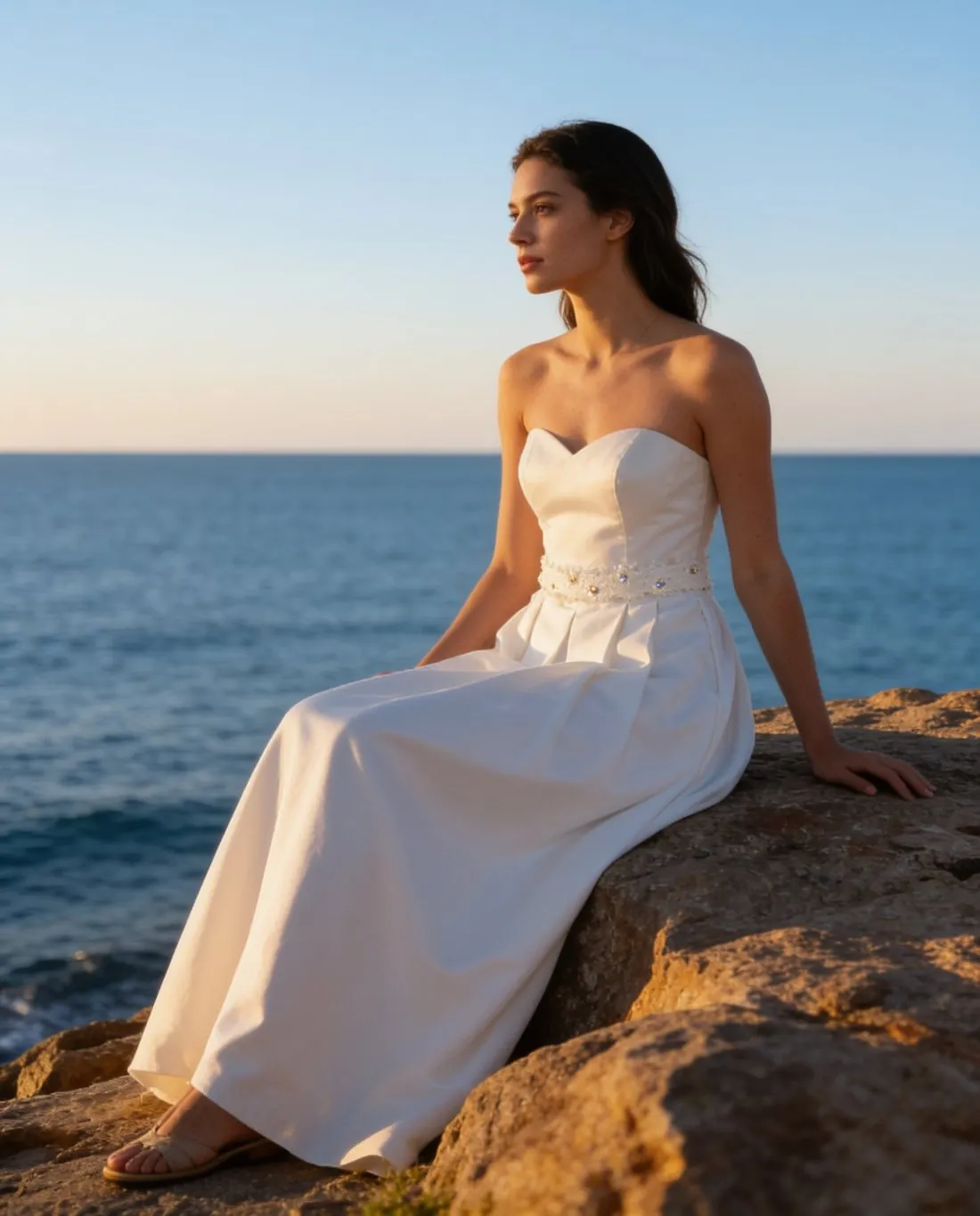
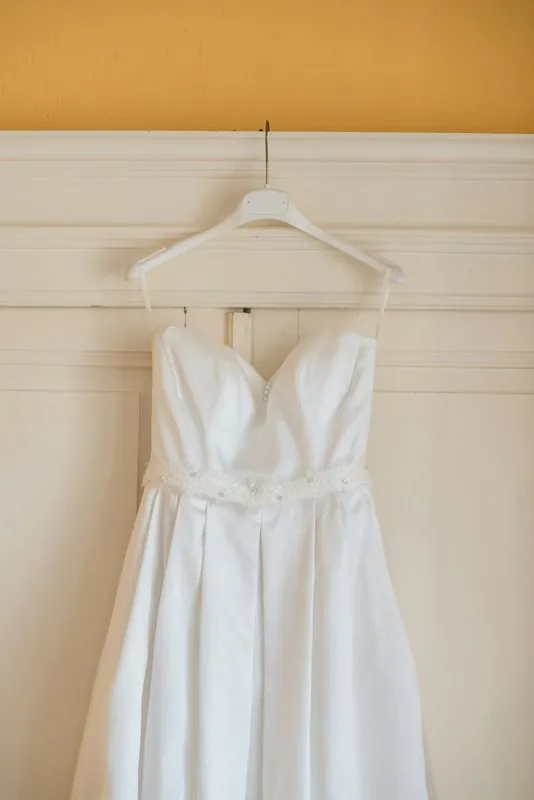
Can AI replace a fashion photoshoot today?
AI can replace part of a fashion photoshoot today: the model, the location and the repeat shots, but not the garment itself or the proof of how it fits. An AI tool still needs a photo of the real item, so the sample, the steaming and the source photography stay.
The answer depends on what the shoot was for. A shoot that exists to fill product pages with on-model views can shrink sharply. A shoot that sets the look of a season, shows movement or features a known face cannot be replaced in the same way.
For the sums on whether the change pays, see the companion guide on whether AI product photography is worth it.
See what on-model AI fashion photography covers
What have large fashion retailers done with AI so far?
Zalando is a well-documented case: Reuters reported in May 2025 that about 70% of its editorial campaign images in the fourth quarter of 2024 were AI-generated. Matthias Haase, its vice president of content solutions, said production time fell from six to eight weeks to around three to four days, and costs by 90%.
Those figures come from the company and describe editorial campaigns, not every product image. Haase also said at the time that traditional shoots would still be needed and that he did not see AI making creatives redundant.
The picture had moved by October 2026. Reuters then reported that Zalando shut both of its Berlin photo studios in 2025 and that, overall, it cut more than 340 jobs, retaining some of those employees in other roles. About You, which Zalando acquired in July 2025, also closed its studio and is launching Scayle Studios, which makes digital imagery for other retailers.
According to a company spokesperson, Scayle had 130 brand clients and generated 190,000 outfits in the month before the report; the business promises a production-cost reduction of "more than 90 percent". Reuters also described Mango as having rolled out AI-generated models at scale.
A small brand should read these numbers with care. They are company claims from large operations with far bigger shoot budgets to cut.
Will AI replace product photographers?
AI is replacing some product photography work, but the evidence does not show the profession disappearing. US Bureau of Labor Statistics data, published on the Department of Labor's O*NET site, show about 145,000 photographer jobs in 2025, a projected decline of 1% or more by 2035, and 10,700 projected job openings from growth and replacement.
The projection covers all photographers, not product photographers alone.
The sharpest pressure appears to fall on routine e-commerce work, where studio closures such as Zalando's are the visible sign. Work that holds up better is the work AI depends on or cannot do: source photography of real items, hero images, campaign direction, and checking output against the product.
What can AI still not do in fashion photography?
AI still cannot show what nobody photographed, prove how a garment fits, or guarantee that every detail stays exact.
Unseen sides: a back view can only be accurate if a back photo exists. Without one, the tool fills the gap with a likely design rather than the real one.
Fit and movement: an AI image shows a plausible drape, not how this fabric falls on this body. Baymard's apparel testing (2020) found that shoppers use images of people to judge length, scale and fit, which is why a real fit reference keeps its value.
Exact detail: Herofab's own check of 303 generated images found an invented detail in 9.6% and a different product in 4.0%. Within Virtual try-on, trousers and other bottoms were the weakest group, with 8 of 11 flagged, though that sample is small. The check covered images made between 24 September and 12 October 2026, before Herofab's late-October image engine change.
Named people: a recognisable person's likeness needs that person's consent. A digital twin of a model is not a shortcut around it, as the guide on AI and real models explains.
Original direction: AI recombines what it has learned. A person still decides the idea of a campaign, and a person still has to judge whether the result fits the brand.
Show one detail in a close-up from the real product
Which fashion shots should stay real?
Hero campaign images, fit references, movement and anything with a named person should stay real; catalogue views, colour variants and backgrounds are the best candidates for AI. The table sets out each shot type, for a brand deciding what to book.
| Shot | Recommended route | Reason |
|---|---|---|
| Season hero or campaign image | Real shoot | Sets the brand look; full control of light, styling and talent |
| Fit and length reference | Real, on a real body | AI does not prove fit |
| Movement and drape | Real | Fabric behaviour is the point of the shot |
| Named talent or ambassador | Real, or a digital twin with written consent | A likeness needs permission |
| Products with labels or fine text | Real, or AI with a line-by-line check | AI can alter letters and logos |
| Fabric, hardware and stitching close-ups | A real close-up as the source | Texture is easy to lose or invent |
| Standard on-model catalogue views | AI, checked against the item | High volume, repeat framing |
| Ghost mannequin and flat lay | AI from a real photo, or real | The photo of the item is still the input |
| Colour variants | AI from one photographed colour, checked against a sample | Avoids reshooting each colour |
| New backgrounds and locations | AI | The product stays in the frame; the setting changes |
Change the location of a fashion image
When is a fashion photoshoot still the better choice?
A real fashion photoshoot is the better choice when the images have to build the brand rather than fill a catalogue. A first collection, a lookbook for wholesale buyers and a press campaign all fall into this group.
A shoot also wins when the garments are hard to reproduce: sheer layers, complex construction, fine tailoring or prints with small text. In Herofab's check of 303 generated images, an invented detail was the most common fault, and 35.6% of the images with readable text showed small differences, so these items carry more review work than a plain garment.
Audience matters too. In a survey of 411 shoppers published by Stylitics and Aha Studio (a vendor study, undated), 31% reacted negatively on learning that images were AI-generated, and 37% said they would be more careful about sizing. A brand that sells on craft or authenticity should weigh that reaction before removing real shoots.
How can a brand reduce shoots without ending them?
A brand can reduce shoots in stages by replacing the most repetitive images first and keeping one real shoot per season. Four steps cover most ranges.
First, list the shots from the last shoot and mark which ones proved fit or carried the brand. Second, photograph every item on a hanger or laid flat, front and back, as source material. Third, generate the repeat views with AI and check each against the garment. Fourth, shorten the next real shoot to the hero images and fit references that remain.
Reuters reported in October 2026 that some brands now ask for AI rights in shoot contracts. A brand that reuses real model images in AI needs that permission first, and the terms belong in the contract.
Get more poses from one model image
Checklist
- Mark each planned shot as brand, fit or catalogue.
- Keep real shoots for hero images, fit references and named talent.
- Photograph every item front and back as AI source material.
- Check each AI image against the garment, including the back.
- Get written consent before putting a real model's likeness through AI.
- Review the split after one season, using returns as well as sales.
Sources
- Reuters via iTnews: Fashion's AI era, face swaps and digital clones (27 October 2026)
- Reuters via Asharq Al-Awsat: Zalando uses AI to speed up marketing campaigns (7 May 2025)
- O*NET OnLine, US Department of Labor: Photographers (BLS 2025 wage data and 2025–35 projections)
- Baymard Institute: Human model images in apparel (1 December 2020)
- Stylitics and Aha Studio: AI fashion photography survey (undated)
Checked 31 October 2026. Rules change; the official pages are the final reference.