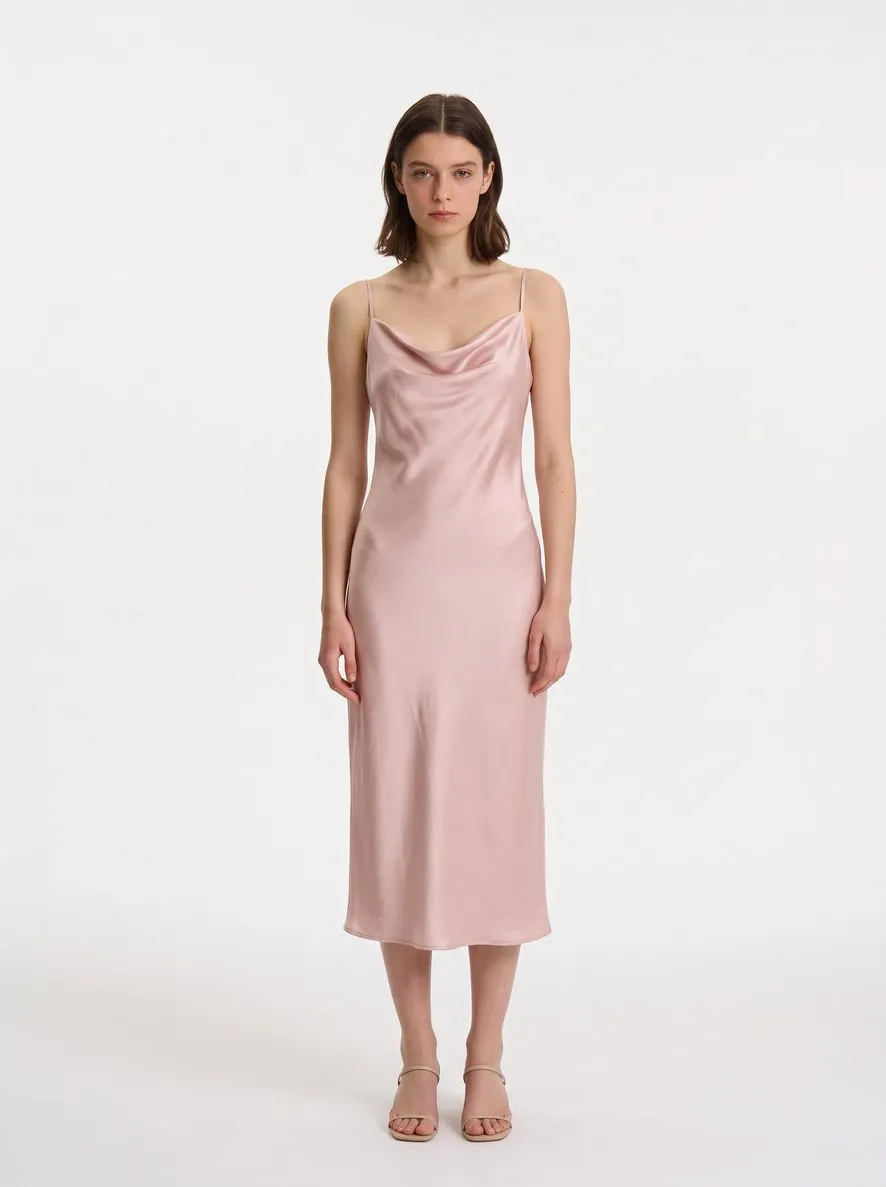
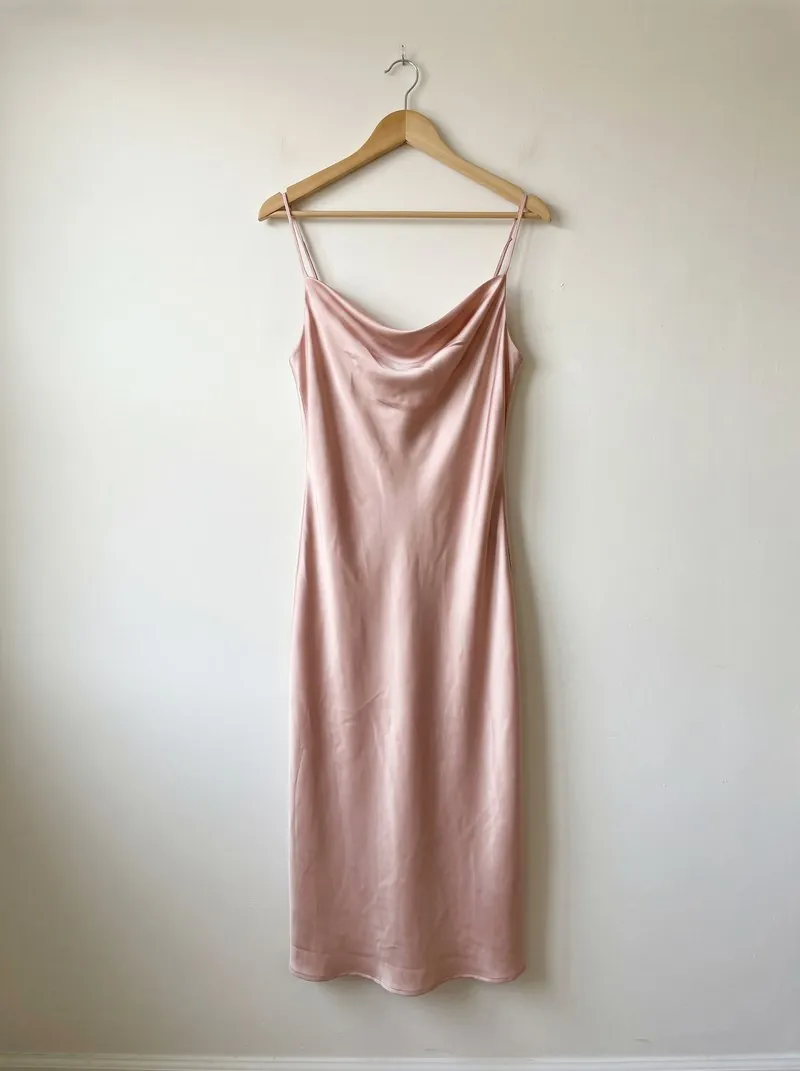
Can AI show how clothes really fit?
AI images cannot show how clothes really fit, because ordinary image-based try-on has no measurement of the garment or the body. The companies and researchers building these systems say so directly.
Google's Merchant Center help says its Try-on tool “doesn't show exact fit or size”, and that the generated image can show how an item might look but “doesn't indicate fit”. Its Shopping help tells shoppers to “always refer to standard size charts, customer reviews, and product details”. Google's Doppl experiment carried the same warning in June 2025: “Fit, appearance and clothing details may not always be accurate.”
Research explains why. The FIT paper (arXiv, April 2026) states that “current VTO methods default to generating well-fitted results regardless of the garment or person size.” The FitVTON paper (June 2026) describes existing methods as “prioritizing texture preservation over physical plausibility”.
What does an AI model photo actually show?
An AI model photo shows how a garment could plausibly look on a body, which helps with style, colour and outfit but not with choosing a size. The model infers drape from a picture, without data on fabric weight, stretch or real dimensions.
The ratings below are Herofab's reading of the evidence on this page, not measured results.
| Buyer's question | AI model photo | Real on-body photo | Size chart and measurements |
|---|---|---|---|
| What does the style look like worn? | Yes, as an estimate | Yes | No |
| Where does the hem fall on a person? | Plausible, not measured | Yes, for that person and size | Partly, from the length |
| How tight is it across the chest? | No | Partly | Yes, against a garment the buyer owns |
| How does this size differ from the next? | No | Only if both sizes are shot | Yes |
| How does the fabric stretch or hang? | No | Partly | Only if the stretch is stated |
Is there any AI that measures fit?
Fit-aware AI exists in research, and measured fit exists in 3D simulation, but both need measurements that an ordinary try-on image does not have. The FIT dataset provides over 1.13 million try-on image triplets with precise body and garment measurements. Its garments are synthetic and draped by physics simulation, its authors limit it to upper-body garments in standard views, and they describe it as “the first steps towards solving this open problem”.
3D simulation takes a different route. In April 2023 Zalando piloted a virtual fitting room in which customers built a 3D avatar from height, weight and gender, then saw a heatmap of where 22 jeans would sit tight or loose. The announcement reports no return effect for that pilot.
One question separates the two kinds of tool: what measurements does it take as input? A tool that takes only a garment photo and a model photo cannot compute fit, however convincing the image looks.
Do AI model photos increase returns?
No independent measured data shows whether AI model photos increase or reduce returns, as of October 2026. Research for this page found stated intentions and vendor claims but no controlled measurement. That is an absence of evidence, not evidence of no effect, and any vendor figure without a control group should be treated as unverified.
The table shows what related sources measured. None of them isolates AI model photos.
The effect could run either way. On a listing with only flat lays, an on-body image may set better expectations. A tool that defaults to a well-fitted result could instead set an expectation the garment cannot meet. Both remain hypotheses until tested.
| Source | What it measured | Result |
|---|---|---|
| Stylitics and Aha Studio survey, 411 shoppers, undated (vendor) | Stated reactions on learning a virtual model was used | 37% would be more careful about sizing; 30% expected they might have to return the item. These are expectations, not returns |
| De, Hu and Rahman, Information Systems Research, 2013 | Product-level usage data at one women's clothing company | More zoom use linked to fewer returns; more use of alternative photos linked to more returns and lower net sales. An association, with no AI images |
| Dzyabura et al., Marketing Science, 2023 | Item return rates at one European apparel retailer | Return rates ran from 13% to 96%, averaging 53%; product images helped predict them |
| Zalando (self-reported) | Size advice against items without it, on an undated page; Size & Fit AI, reported March 2026 | One third of returns are size-related; size-related returns 10% lower against items without size advice; more than 8% avoided (different bases). These are size tools, not images |
| National Retail Federation, October 2025 | Retailer estimates across all categories | An estimated 19.3% of online sales returned in 2025 |
What does that evidence suggest?
The evidence suggests that factual information matters more than the number of images. Purdue's summary of the 2013 study says zoom provides factual information, while alternative photos, “almost always using a model”, give an impression. Those were real models, so the same pattern for AI images is plausible but unproven.
What shows fit better than an AI image?
Garment measurements in a size chart show fit better than any image, because a buyer can compare them with a garment they already own. Baymard's July 2022 apparel research found that 83% of desktop and 87% of mobile apparel sites failed to provide sufficient sizing information, and its 2026 data ranks size accuracy and fit details first among what shoppers seek in reviews, at 48%.
Among the ten elements Baymard names, a chart should match the product type, give centimetres and inches, explain how to measure and sit near the size selector.
On-body measurements add what a flat chart cannot. Have a real person of known height wear the sample and record where it sits: “hem at mid-thigh on a 170 cm wearer in size M” is a fact a buyer can use. Baymard recommends giving the model's measurements and size worn next to on-model images.
An AI image cannot carry those facts. A synthetic model has no real height and no one wore the garment, so “model wears size M” under a generated image would state something that did not happen.
| Garment | Measure flat | Record on the body |
|---|---|---|
| Tops | Chest, shoulder, sleeve, length | Where the shoulder seam and hem sit |
| Dresses | Chest, waist, hip, length | Where the waist and hem fall |
| Trousers and jeans | Waist, hip, rise, inseam, leg opening | Where the waistband and hem sit |
| Outerwear | Chest, shoulder, sleeve, length | Room over a jumper or layer |
Should I show clothes on multiple body types?
Showing clothes on several body types helps buyers picture a garment, but with AI the variety is visual and does not prove the garment fits those bodies. A size 20 is cut differently from a size 8, so an AI image made from one photographed sample only estimates how another size would look.
Baymard's 2020 research treats multiple models as “an enhancement and not a necessity”, while noting that they matter most when fit is a key concern. Its 2026 data shows 24% of female and 14% of male apparel shoppers self-identify as plus-size.
For fit-critical ranges, photograph real samples on real people at several sizes, and use AI images for style and colour. Near an AI image, say clearly that the size chart decides the size.
Create model: slim, average, curvy or plus, 4 credits, $0.16–$0.48 per image
How can a seller measure the effect on returns?
A seller can measure the effect on returns by randomly assigning who sees AI images, then comparing returns per order once the return window has closed. Comparing this season with last season will not work, because prices, trends and customers all change.
Run the test in this order. First, record the current return rate by product and return reason. Second, split visitors at random between current and AI images, or, if the store cannot do that, match pairs of similar products and change one of each pair. Third, keep prices, promotions and size charts the same across both groups. Fourth, wait until the return window has closed for the last order. Fifth, compare the groups, with a confidence interval around the difference.
Sample size decides whether the result means anything. Detecting a fall in return rate from 20% to 18% takes about 6,000 orders in each group, at the usual 5% significance and 80% power; 20% to 19% takes about 25,000. A store with fewer orders should treat the result as an indication only.
Judge the result on net sales, because a higher conversion rate means little if the extra orders come back.
| Metric | How to calculate it | What it tells you |
|---|---|---|
| Return rate | Orders with a return ÷ orders | The headline effect |
| Size-related return rate | Returns coded too small or too large ÷ orders | Whether fit expectations changed |
| “Not as pictured” return rate | Returns coded as different from the image ÷ orders | Whether the image misled |
| Net sales per visitor | (Sales − refunds) ÷ visitors | The combined result |
When should I not rely on AI images for fit?
AI images should not carry the fit decision for garments where a small size difference changes the outcome, such as tailoring, bridal wear, denim and close-fitting sportswear. Those items need real photos on real people, full measurements and fit notes.
AI images are a more reasonable choice where fit tolerance is wide, such as relaxed T-shirts, scarves and bags, or when the fit is already documented elsewhere on the page. A small seller can trial this by trying one sample on one real person and writing down the result.
An image that misstates a product can also break channel rules. Herofab's guide to the 2026 AI image rules covers them, as a summary and not legal advice.
AI product image rules for 2026
Checklist
- Measure every size flat, and publish the figures in centimetres and inches.
- Match the size chart to the product type, and place its link beside the size selector.
- Try the sample on a real person of known height, and record where it sits.
- Do not attach a height or a “size worn” line to a synthetic model.
- Show zoom on fabric, stitching and closures.
- Code returns by reason, separating size from “not as pictured”.
- Test AI images against a control group before rolling them out.
Sources
- Google Merchant Center Help: How Google's Try-on tool works
- Google Shopping Help: How the Google Try-On tool works
- Google: Try on looks and discover your style with Doppl (June 2025)
- Karras et al.: FIT, A Large-Scale Dataset for Fit-Aware Virtual Try-On (2026)
- Ning et al.: FitVTON, Fit-aware Virtual Try-On via Body-Garment Size Control (2026)
- Stylitics: On-Model AI Imagery in Fashion, a survey of real shoppers
- De, Hu and Rahman: Product-Oriented Web Technologies and Product Returns (2013)
- Purdue University: Online retail technologies have mixed results (2014)
- Dzyabura et al.: Leveraging the Power of Images in Managing Product Return Rates (2023)
- Zalando: How Zalando leverages technology to help customers find the right size
- Zalando: Full-year 2025 results (March 2026)
- Zalando: Virtual fitting room pilot (April 2023)
- National Retail Federation: Consumers expected to return nearly $850 billion in 2025
- Baymard Institute: Apparel, 10 Best Practices on Sizing (2022)
- Baymard Institute: Provide Images of Accessory, Apparel, and Cosmetic Products on a Human Model (2020)
- Baymard Institute: Apparel & Accessories Quantitative UX Insights (2026)
Checked 31 October 2026. Rules change; the official pages are the final reference.