With the sun near the horizon, its light travels through more of the atmosphere, which scatters the blue and leaves a warm tone. Shadows grow long and soft, and faces and fabric are lit from the side instead of from above. Fashion and lifestyle photography uses the hour for its mood.
The same warmth shifts colours. White turns cream, pale blue turns grey, and metallic fabric picks up a golden reflection. A golden-hour image therefore sets the mood of a product, and a neutral studio image beside it states the true colour. On a real shoot the hour allows only a limited number of frames before the light is gone.
Front light, side light and back light
A low sun can be used from three directions. With the sun behind the camera, the light is even and warm and shows colour and print clearly. With the sun to one side, it rakes across the surface and brings out knit, linen, leather grain and pleats, while the far side of the product falls into shade.
With the sun behind the subject, hair and the outline of a garment receive a bright rim and sheer fabric glows. This is the look most associated with the hour, and the hardest to control: the front of the product is in shade, and the lens faces the sun. A reflector or a pale wall returns light to the front, and exposure is set for the product, not for the sky.
Planning a shoot round a short window
The published time of sunrise or sunset refers to a flat horizon. Buildings, trees and hills hide a low sun earlier, so the usable light on a street or in a valley ends before the hour does. The location is therefore visited beforehand at the same time of day, and styling, hair and the order of outfits are settled before the light arrives.
During the hour the light changes continuously in brightness and colour. Frames taken at its start and at its end do not match, so each outfit is completed in one run instead of being revisited later. The most important outfits are photographed in the middle of the window, and exposure is checked again every few minutes.
How real golden-hour light can be recognised
Warm colour alone does not make a golden-hour picture. In real low sun the shadows are long, they all point away from one source, and they are cooler than the sunlit areas, because shade is lit by the blue of the sky. The highlights sit on the side of the face and the garment, not on top of the head and shoulders.
These signs are useful for checking a picture that was warmed in editing or generated. Typical faults are an even orange wash that tints light and shade alike, the short shadows of a high sun under a sunset sky, and a model lit from one side while the scene behind is lit from the other. Each of them makes the light of the picture contradict itself.
Golden hour and related terms
- White balance
- White balance is the camera setting that decides which light counts as neutral. Golden hour is a property of the light itself, and white balance is the control that decides how much of that warmth is recorded: the same evening scene can be saved as golden or as almost neutral.
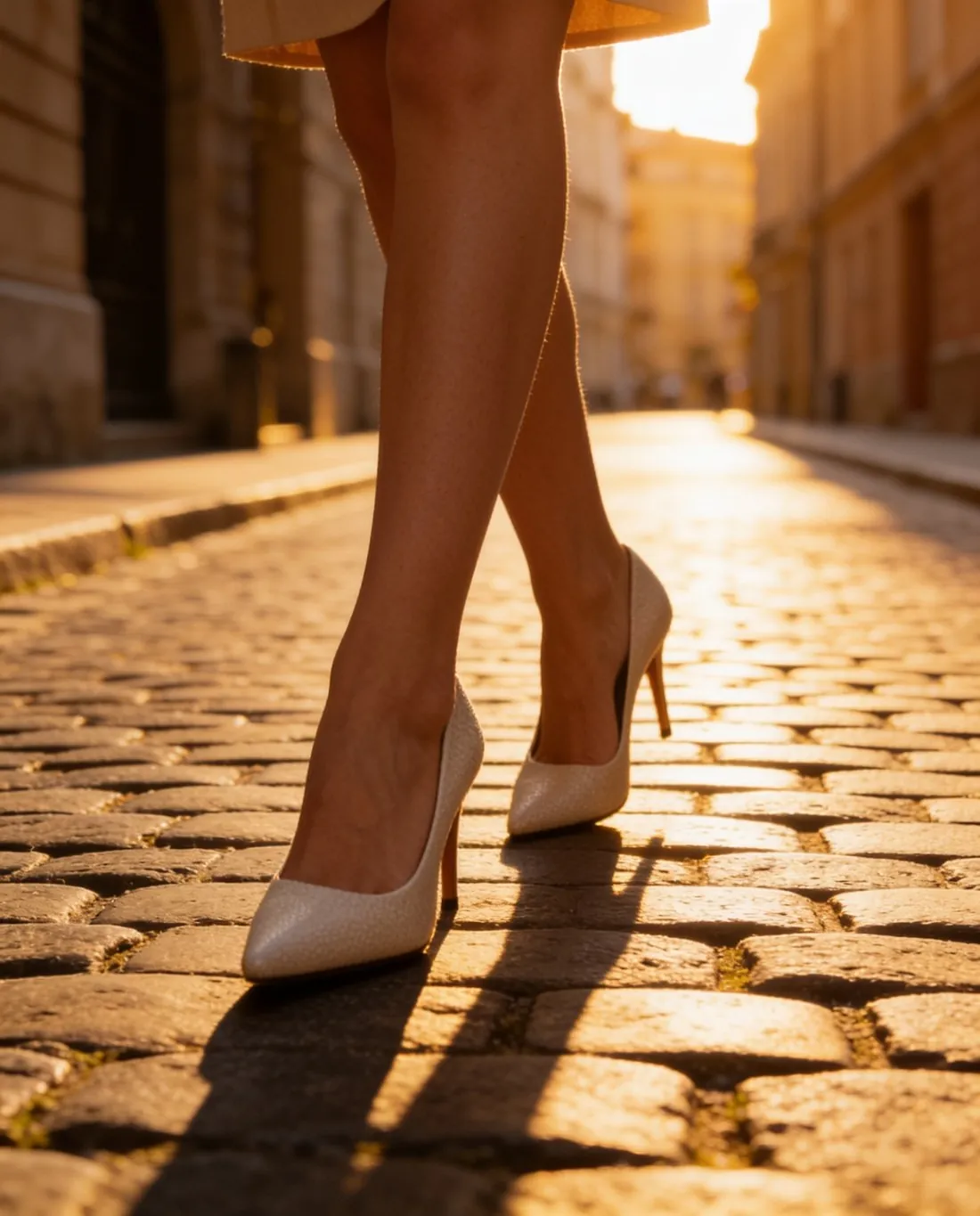 Lifestyle image
- A lifestyle image shows a product in use or in a real setting. Golden hour is one of the lights such an image can be taken in; a lifestyle image made indoors or under a grey sky is a lifestyle image all the same.
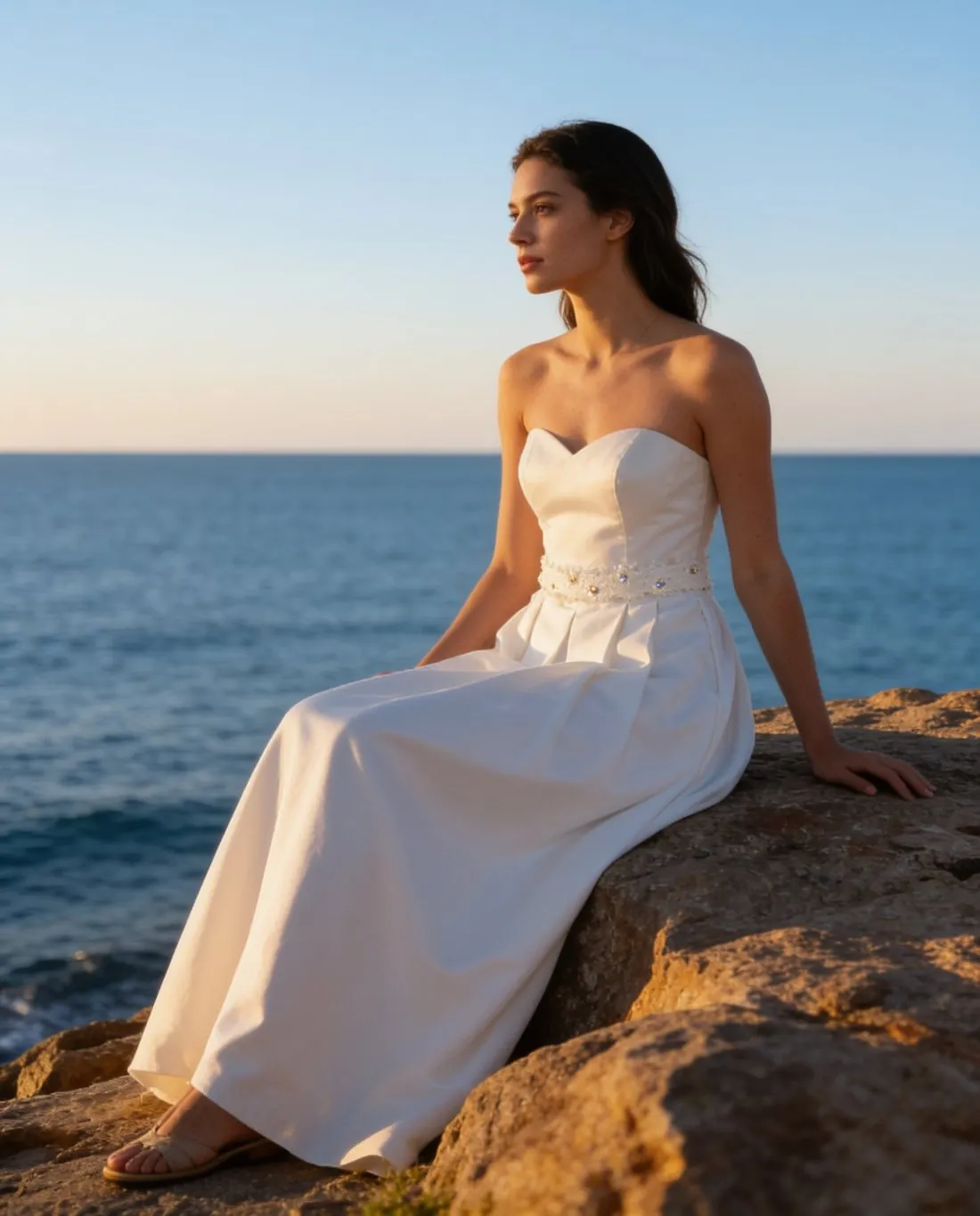 Lookbook
- A lookbook presents a collection as complete outfits in one chosen mood. Golden-hour light is a frequent choice for it, and it then has to hold for the whole set, which is demanding when the light lasts for only part of an evening.
- Hero shot
- A hero shot is the single picture chosen to represent a product or a collection. A golden-hour frame is often chosen for that role in a campaign, while the first image of a marketplace listing usually remains a neutral picture on a plain ground.
A checklist for a golden-hour image
- The shadows are long and point in one direction, on the model, on the product and on the ground alike.
- The product is lit: with the sun behind it, a reflector or a pale wall has returned enough light to its front to show colour and detail.
- The warm tone lies in the sunlit areas and the shadows are cooler; no even orange wash covers the whole picture.
- No flare or bright haze from the sun lies across the product, its logo or its print.
- All frames of one outfit were taken within a few minutes, so that brightness and colour match across the set.