Why an earring is shown from the side of the head
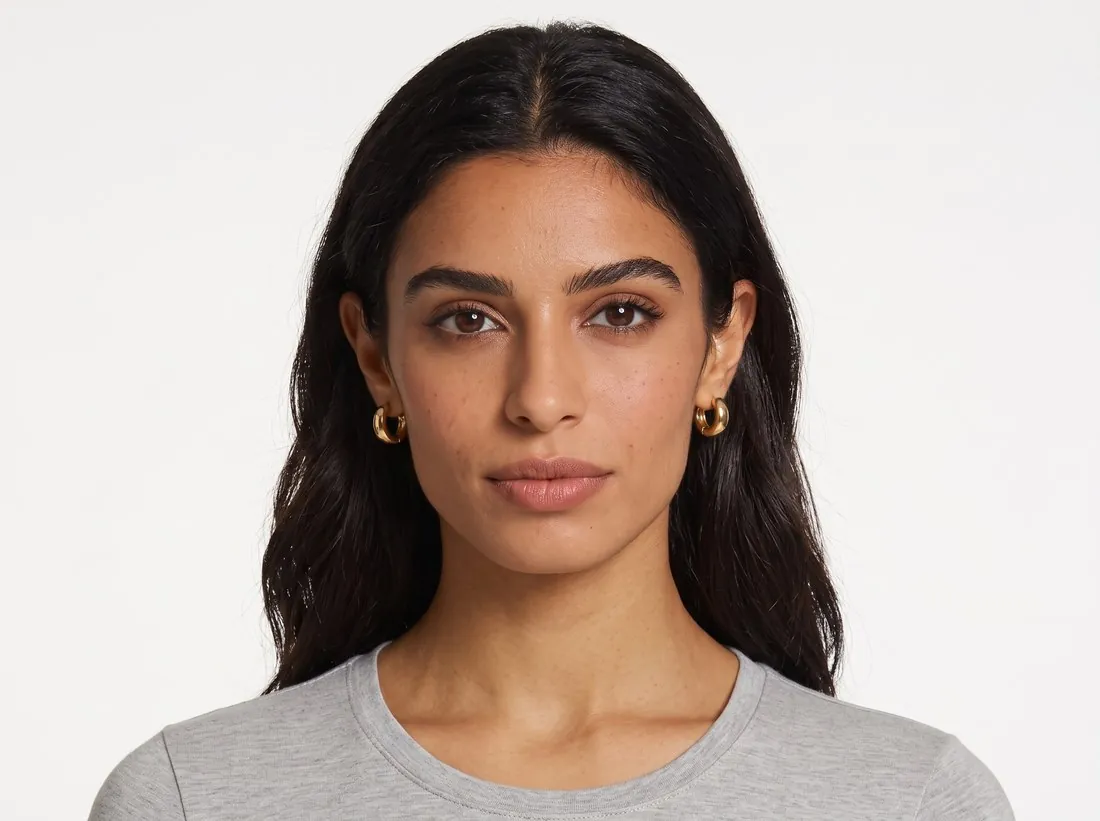
Earrings get a close three-quarter profile of the head, turned to the ear that wears the piece, with the hair tucked back. Both earrings are worn; the camera faces one ear, where the earring hangs large and centred. Unlike ring and bracelet images, the face stays in view, neutral or smiling.
The category sets this frame, so pose, back view and size are not offered, and no other jewelry joins the pair. A drop or a hoop hangs clear of the lobe in profile; a stud sits flat against it, so its stone and setting deserve the closest look in the result.
Your own photo, a studio model and the backdrop
To see a pair on yourself, upload your own photo as the person and tick the consent box. Your face then comes from that photo, yet the close profile still applies: the result shows you turned toward one ear, not posed as in the original.
Backdrops range from a white or light grey studio to outdoor and indoor settings, locations such as a garden, or an image of your own. Away from those locations, the brief asks for soft light that keeps the real shine of metal and stones.
Metal, stones and the photo the brief works from
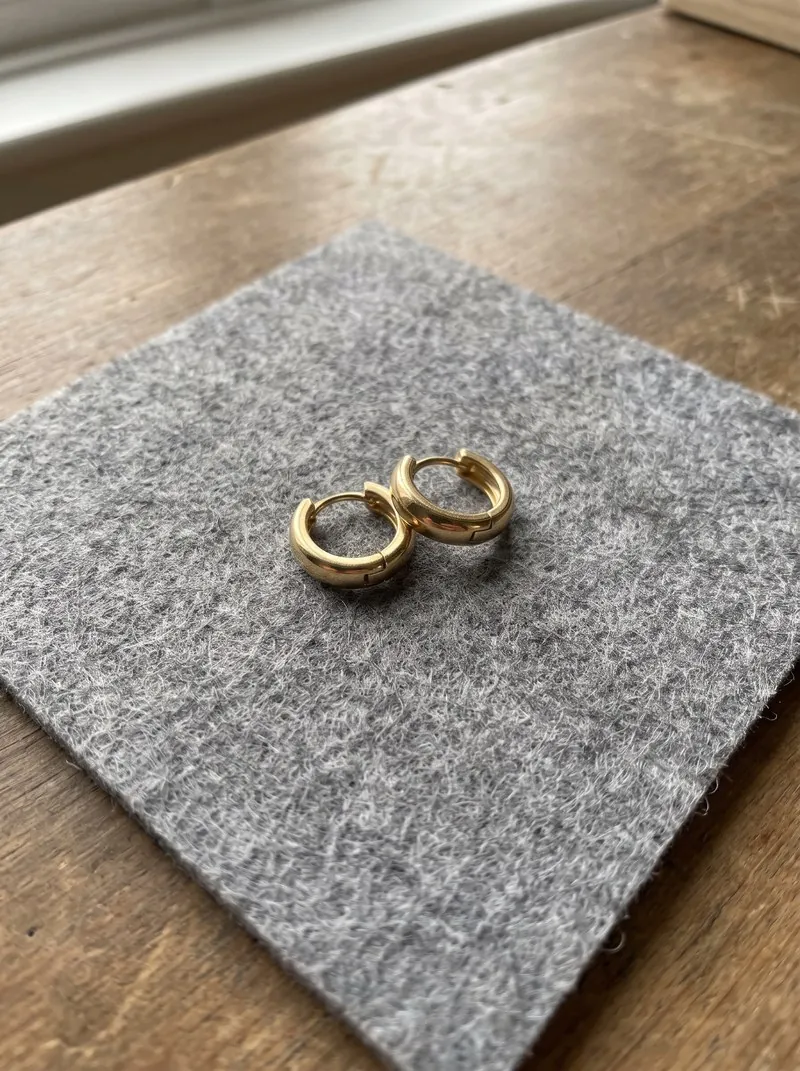
The brief asks for the metal's colour and finish, and for every stone, bead or pearl in its count, cut and place, so it can only follow what the pair photo shows. Polished metal mirrors the room: daylight through a thin curtain, or white card held beside the pair, keeps glare off the piece.
A close-up of pavé or tiny stones can be added as an optional detail image. A pair left on its stand, in its box or beside a ruler can be uploaded as it is; the brief says to ignore those. If a stone or the metal still changes, mark the area on the delivered image and request a fix.