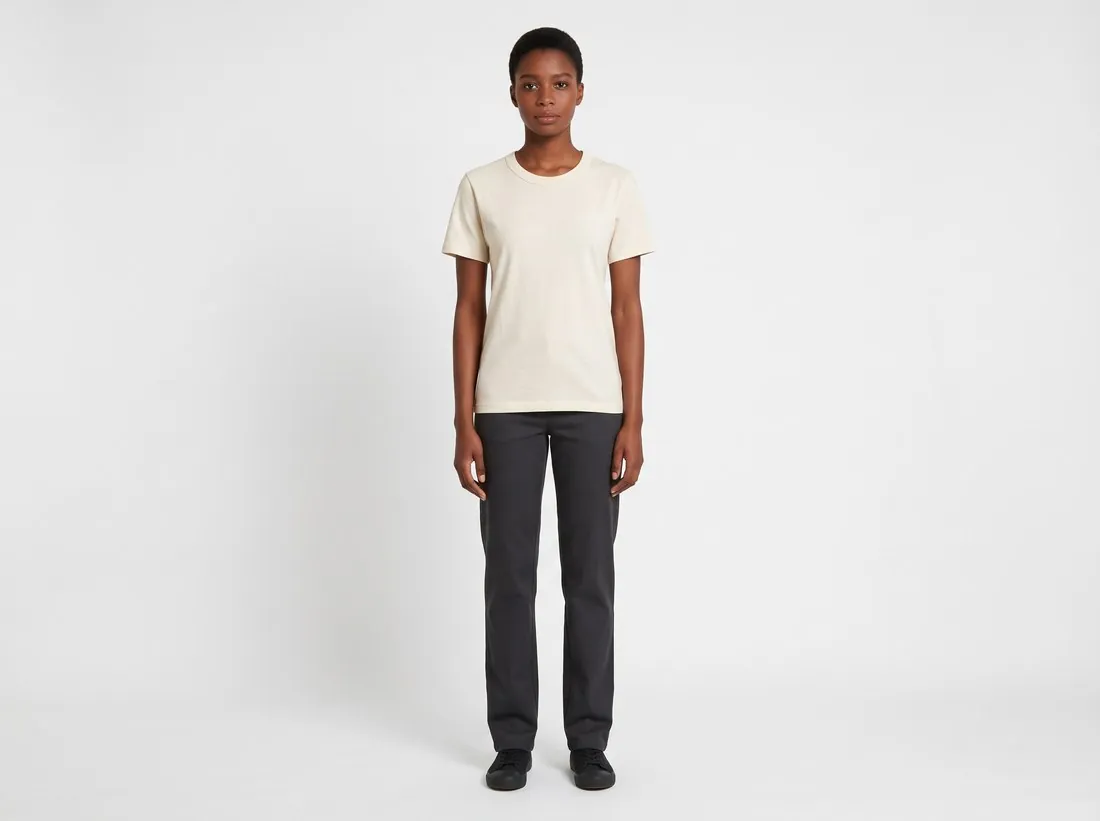
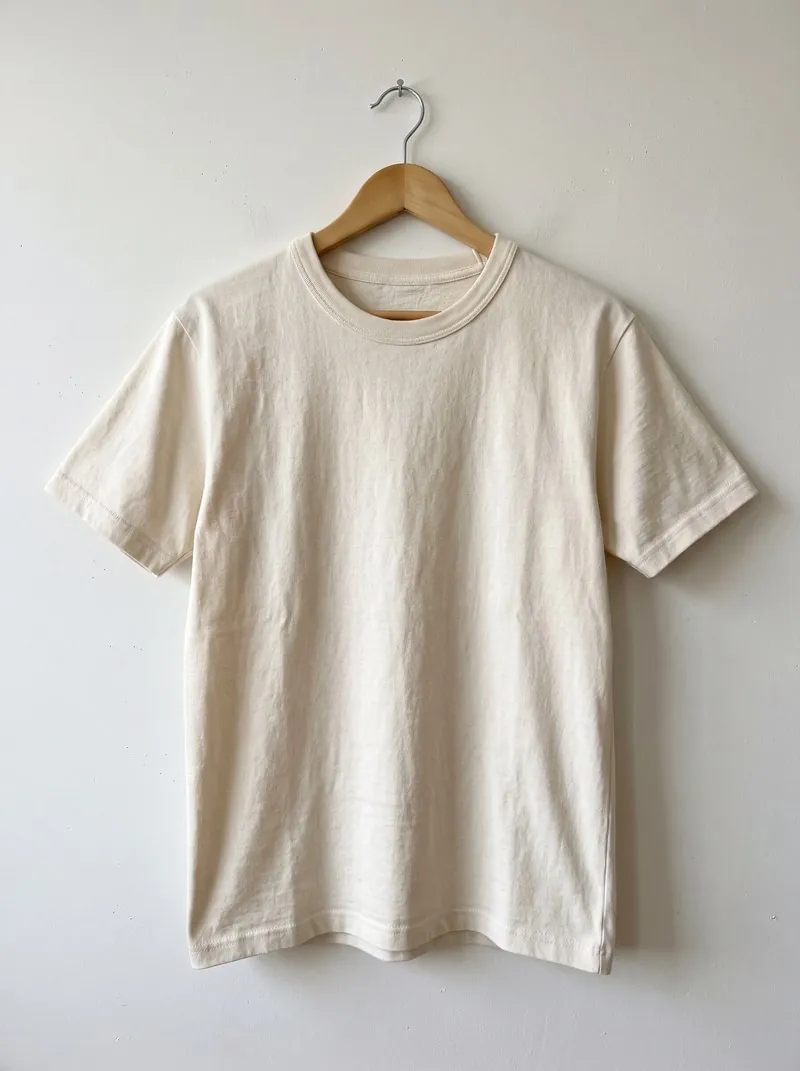
Cropping out most of the face moves the shopper's attention to the fit, the fabric and the construction of the garment, and gives the garment more of the frame. When every image in a collection is cut at the same line, the product grid looks like one catalogue, even with different models. A photo without a recognisable face also raises fewer questions about the model's permission, which some marketplaces ask sellers to hold.
The crop line is chosen per category and then kept. For tops and jackets it usually runs from just below the nose to the upper thighs; for dresses, from below the nose to below the hem; for trousers, from the chest to the feet. A crop never cuts through the product itself, such as a hem, a cuff or a bag strap. Photographers also avoid cutting at a joint: a frame that ends exactly at the wrist, the knee or the ankle looks wrong, while a cut between joints does not.
A front crop is made from a wider frame, so the source photo needs room around the garment and enough resolution to be enlarged. A source framed too tightly loses the hem, and a small source turns soft when cropped. The pose matters as much: arms held away from the body keep the front of the garment visible. Some fashion marketplaces describe their own crop for the first model view and reject extreme cuts, so the line is checked per channel.