A cardigan on a model, knit and button band in focus.
A cardigan is a knit with a front opening, and both halves matter: the texture of the stitch and the band that carries the buttons. Herofab dresses a studio model in the cardigan from one photo and is briefed to keep the yarn, the colour and the closure.
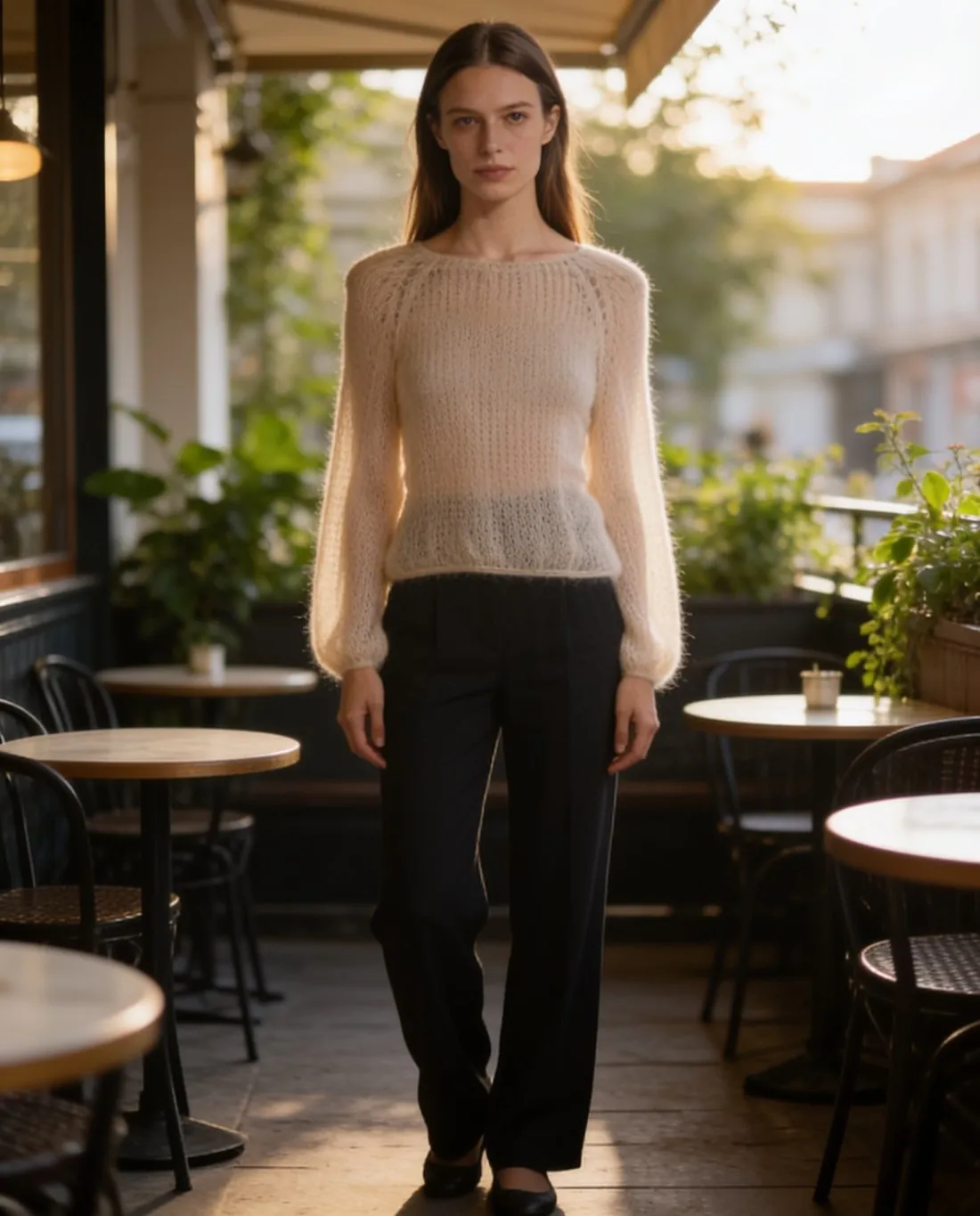
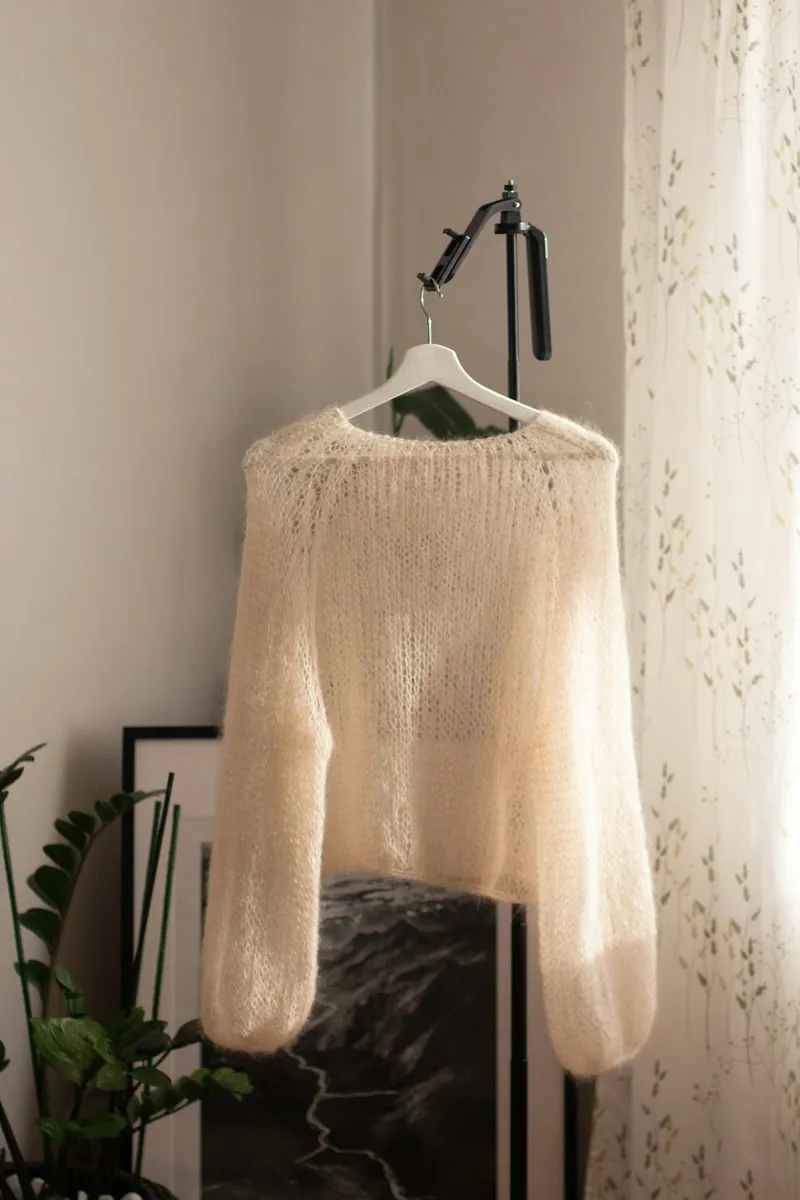
What to inspect on a cardigan image.
- 1
Stitch and gauge
Chunky cable, fine merino rib, brushed mohair and waffle stitch each catch light differently. Compare the scale of the stitch on the model with the cardigan itself; a fine-gauge knit should not thicken, and a fuzzy yarn has a soft edge that deserves a look at full size.
- 2
Button band and closure
The band runs down the centre front and sets the neckline, V or crew. Count the buttons, see that their colour and spacing match, and note whether the front is fastened as it was photographed. A belt or a tie on a wrap style needs the same attention.
- 3
Length, pockets and cuffs
Cropped, hip-length and longline cardigans are different products. Look at where the hem ends on the model, whether patch pockets sit level, and whether the ribbed cuffs and hem are kept, since knitwear hangs differently on a body than on a hanger.
Photographing a cardigan without stretching it.
- Lay heavy knits flat instead of hanging them; a hanger pulls the shoulders and lengthens the body, and the photo is what the try-on reads.
- Button the front completely, or leave it open on purpose and spread the two fronts evenly so the full band and both edges can be seen.
- Take a detail close-up of the stitch and one button, which gives fine-gauge and textured yarns a second reference.
Virtual try-on for cardigans, answered.
Can one cardigan be shown both buttoned and open?
Plan it as two source photos. A cardigan photographed closed gives no view of its inner edges, and one photographed open shows no fastened band. Shoot it each way, straight on, order an image from each, and confirm on both results that the front appears as it did in the photo.
How does a fluffy mohair or bouclé knit hold up?
Fuzzy yarn has a fine, irregular edge, much like hair or fringe, and fine edges are a detail to check first. The image is briefed to keep the fabric as it is; look at the outline of the sleeves and shoulders against the background, and at whether the surface still reads as brushed and not smooth.
Does a cardigan have to be photographed on a body to show its drape?
No. A flat lay or a hanger photo is enough, and a mannequin or worn photo is accepted too. Knitwear drapes differently on a surface and on a body, so the way the knit falls on the model is the tool's reading of it: compare the length and the depth of the neckline with the real piece.
How much does it cost?
5 credits per image, plus one credit for 4K. The cost is shown before you generate, and if a job fails the credits are returned. The 20 free credits at sign-up cover 4 images with this tool.
Your next collection, shot this week.
20 credits at sign-up, no card required. Images made with free credits carry a watermark.