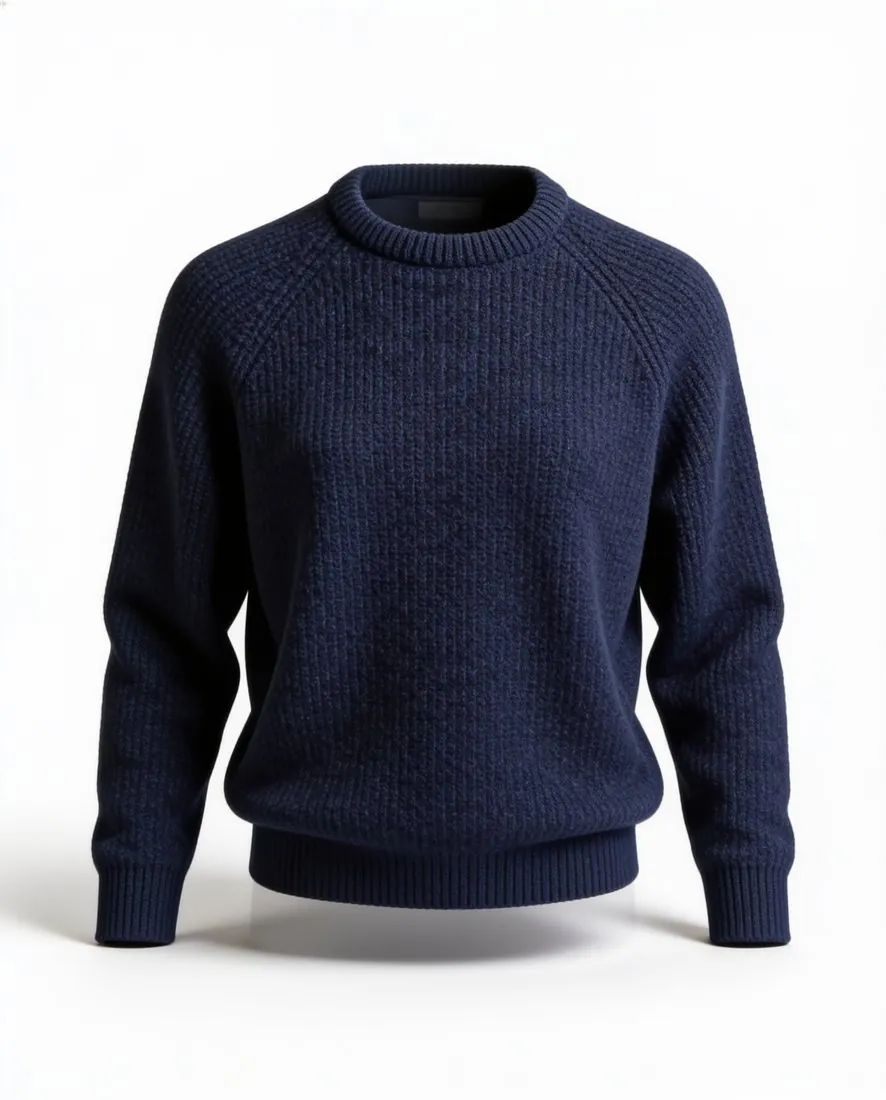
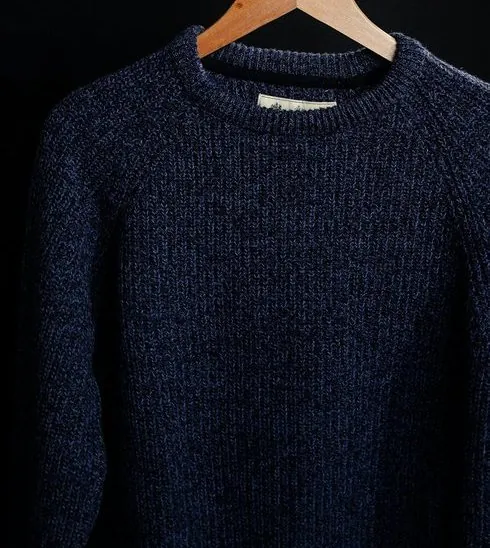
1. Prepare the knit without flattening it
Knitwear keeps the shape it was last given. Fold lines from a shop shelf and a ridge from a hanger appear in a photo as part of the garment. Steam the piece with the steamer held slightly above the fabric, without pressing; an iron pressed onto ribbing flattens the ribs that make cuffs and hems hold to the body. Let the knit cool and settle on a flat surface before moving it.
Remove what the camera magnifies: pills with a fabric shaver or a sweater comb, lint and hair with a roller, loose yarn ends tucked inside. On a second-hand piece, take the condition photos before removing pills if the buyer should see how the knit wears, and say in the description what was done.
2. Flat, on a form, or worn
A heavy knit on a hanger stretches at the shoulders and hangs longer than it is, and the photo records that shape. A flat lay avoids it: the jumper on a large plain surface, the body squared, the sleeves laid along the sides or angled slightly outward, the ribbing straight. Photograph from directly above with the phone parallel to the surface, standing on a step if needed, so the body does not taper toward the hem.
A dress form or a ghost-mannequin view shows the neckline and the volume; a worn photo shows the drape and the length on a body. Each answers a different question, and a listing usually needs a product-only view and a worn view. Whichever product-only view is chosen, keep it for the whole collection, so the category page reads as one set.
3. The stitch, in light from the side
Frontal light, including the phone's flash, fills the shadows between the stitches and turns cables, bobbles and ribs into a flat surface. Light from a window at one side does the opposite: each stitch casts a small shadow and the structure appears. Turn the garment, or move to another window, until the cable pattern stands out on the screen.
Add close-ups of what defines the piece: a cable panel, a rib cuff, the finish of the neckline, the buttons and button band of a cardigan, the seam at the shoulder. Hold the phone far enough away to focus and tap on the stitches; at full zoom, single loops should be distinct. A close-up with a coin or a ruler beside it shows the gauge, which tells a buyer whether the knit is chunky or fine.
4. Yarn colour, heather and mohair
Knitwear colours are often mixtures: heathered greys, marls of two shades, flecked tweed yarns. Automatic white balance under warm indoor light shifts them toward yellow, and the mixture reads as one dull tone. Photograph in daylight, without a filter, and compare the screen with the garment held next to it. Dark knits, such as navy and black, need the exposure raised until the stitch becomes visible.
Mohair, alpaca and brushed yarns carry a halo of fibre that is part of the product. Light from behind or from the side, against a mid-tone or darker background, makes the halo visible; flat frontal light on white loses it. A brushed knit photographed only on white can look plain, so one image against a mid-tone background is worth adding.
5. Measurements and labels
Knitwear sizes vary between brands, and a stretched knit varies from its own label. Lay the garment flat and measure the chest from armpit to armpit, the length from the shoulder seam to the hem, and the sleeve from the shoulder seam to the cuff, without pulling the rib. Write the numbers in the description; a photo of the tape measure across the chest supports them.
Photograph the brand label, the size label and the composition label sharp enough to read. The fibre content, such as wool, cashmere, cotton or acrylic with their shares, is part of what the buyer pays for. On a worn piece, add close-ups of pilling under the arms and at the cuffs, and of any hole, pulled loop or stretched cuff, in the same light as the other photos.
6. What marketplaces ask for knitwear
Knitwear follows each channel's clothing rules. Zalando's catalogue view for apparel is either a model front crop or a primary packshot, and it asks for at least three compliant images for apparel. In compliant views an article can be cropped, partially covered or folded as long as the product remains clearly recognisable, and back views and model views can use any background colour, setting or location.
Rules for the first image differ more between channels than for any other slot, and the clothing rules page lists them by marketplace. For most channels a knit needs a worn view and a product-only view, a close-up of the stitch and the labels. Use each photo as the phone saved it: messaging apps compress images, and the stitch is the first detail to blur into a flat texture.
Checklist
- Steamed without pressing, pills and lint removed
- Flat lay from directly above, or on a form
- Window light from the side for the stitch
- Close-ups of cable, rib, neckline and buttons
- Colour checked in daylight against the garment
- Measurements taken flat, labels readable
Sources
Checked 10 October 2026. Rules change; the official pages are the final reference.