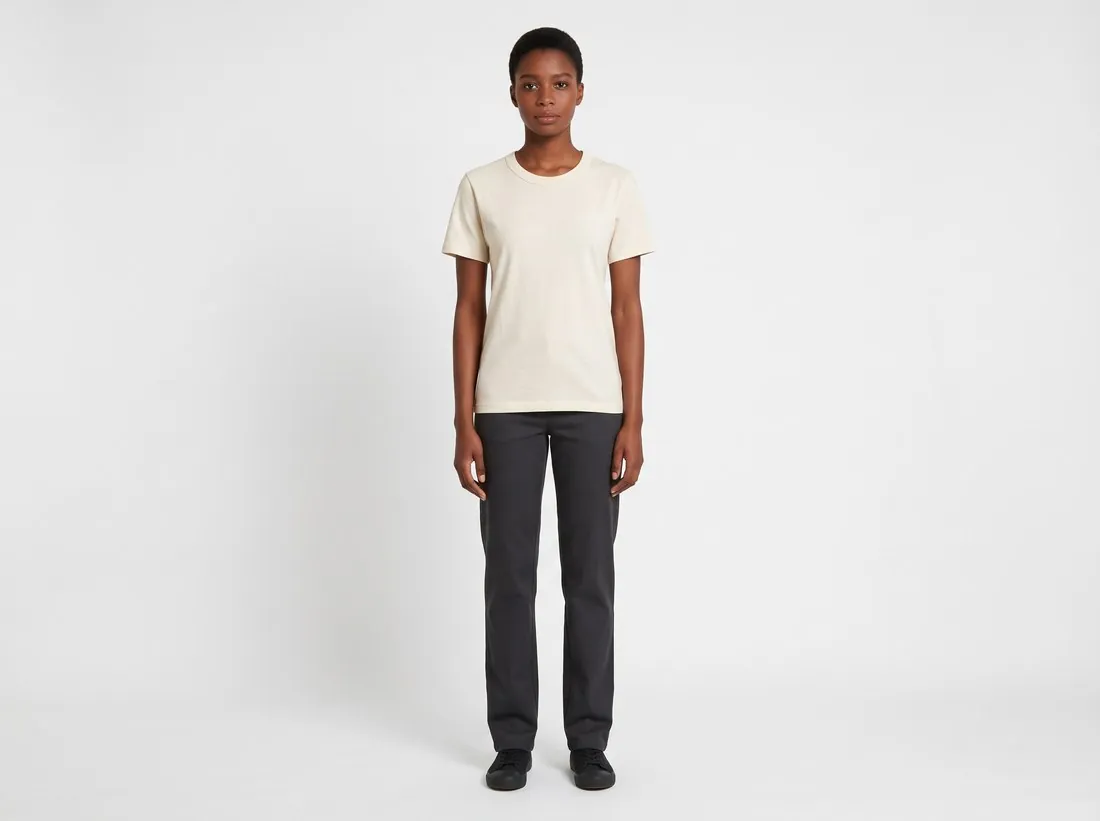
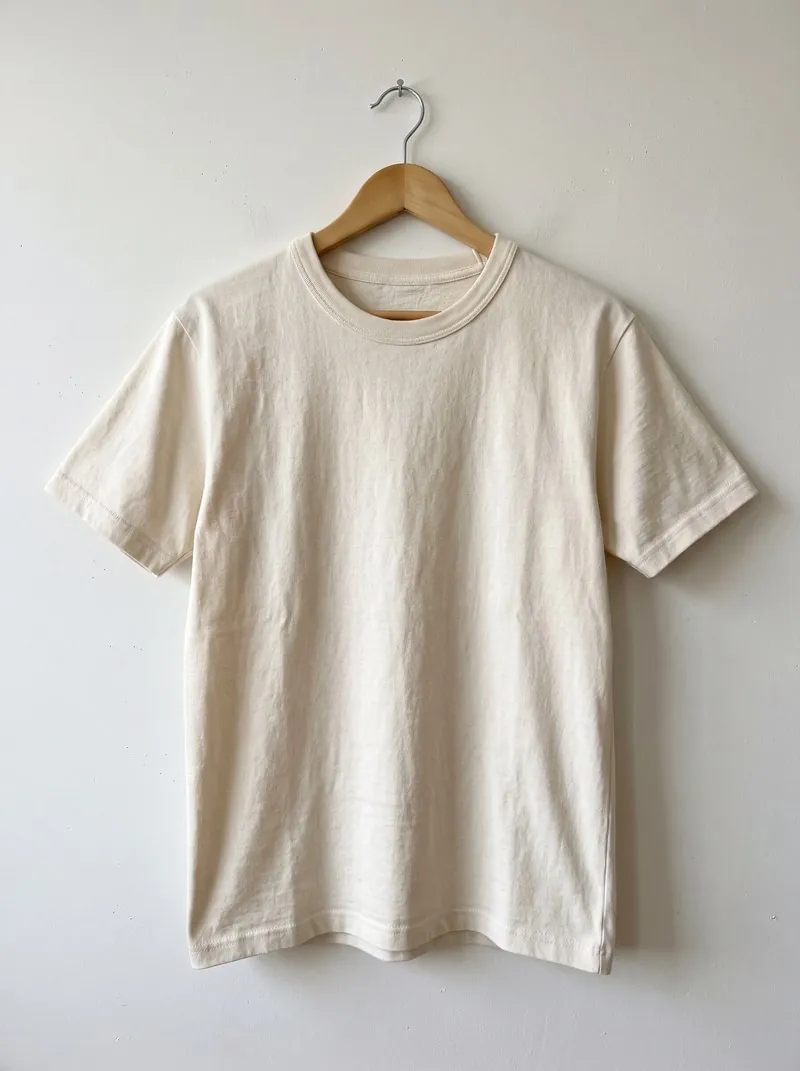
The usual sweep is a roll of backdrop paper hung on a stand and pulled forward onto the floor in a gentle curve; vinyl and fabric are used the same way, and many studios have a curved plaster wall built in. The curve hides the line where floor meets wall, which would otherwise run across the image behind a model's legs or behind the base of a product. Tabletop versions do the same for small products on a desk.
White paper does not photograph as pure white by itself. Lit only from the front it comes out light grey, and it needs its own light or a later cut-out to reach white. Light grey paper is often the more useful choice: it gives an even neutral ground and keeps the outline of white garments. Paper dents, creases and shoe marks show under side light, so the walked-on part is torn off and fresh paper is pulled down. Vinyl wipes clean but reflects.
A model or product placed close to the sweep casts its shadow onto it and picks up its colour along the edges, so a coloured backdrop tints the sleeves of a white shirt. Moving the subject forward and lighting the sweep separately keeps the background even while the product keeps its own light. A full-length model needs a wide roll; near its ends the edge of the paper and the room come into the frame, and the image then has to be cropped or its background extended.