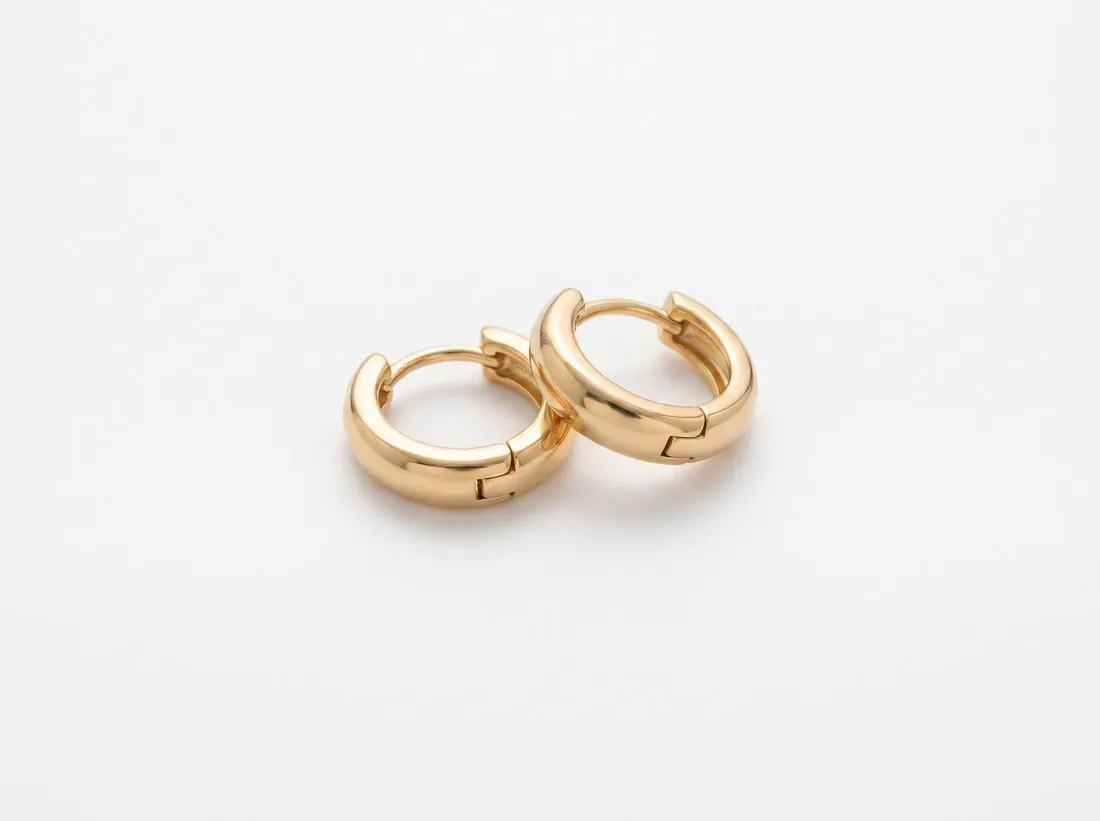
Lamps are placed outside the walls, and the fabric itself becomes the light source on every side. A curved white sheet inside forms the background. For a seller without a studio, a tent on a desk gives a set-up that can be repeated product after product. It suits jewellery, watches, cosmetics, small leather goods and single shoes, and it turns the reflections in shiny products into broad, even white areas instead of a room, a window or the photographer.
Light from all sides also removes the shadows that describe shape. Quilting, embossing and the curve of a bottle flatten, and a white product on the white floor loses its outline. Lighting one wall more strongly than the others brings the shape back. The size limit is strict: a product that nearly touches the walls picks up uneven bright patches, and garments on a hanger or a mannequin do not fit at all. The white inside a tent also tends to photograph light grey, not pure white.
The camera looks in through a slit in the front panel, and polished metal and glass reflect that slit as a dark line or show the lens in it; closing the opening around the lens removes the reflection. Dust, lint and creases in the fabric floor are as large as the product's own details at this scale, so the floor sheet is kept clean and flat. A strongly coloured product can also tint the white walls, which then reflect that colour back onto its edges.