Products seen from above, laid out flat.
Some products explain themselves only from above: a wallet, an open gift box, a pair of shoes side by side, a necklace laid in a curve. Top-down is one of the angles in Product studio, next to front, three-quarter and side, and it starts from a photo taken from above.
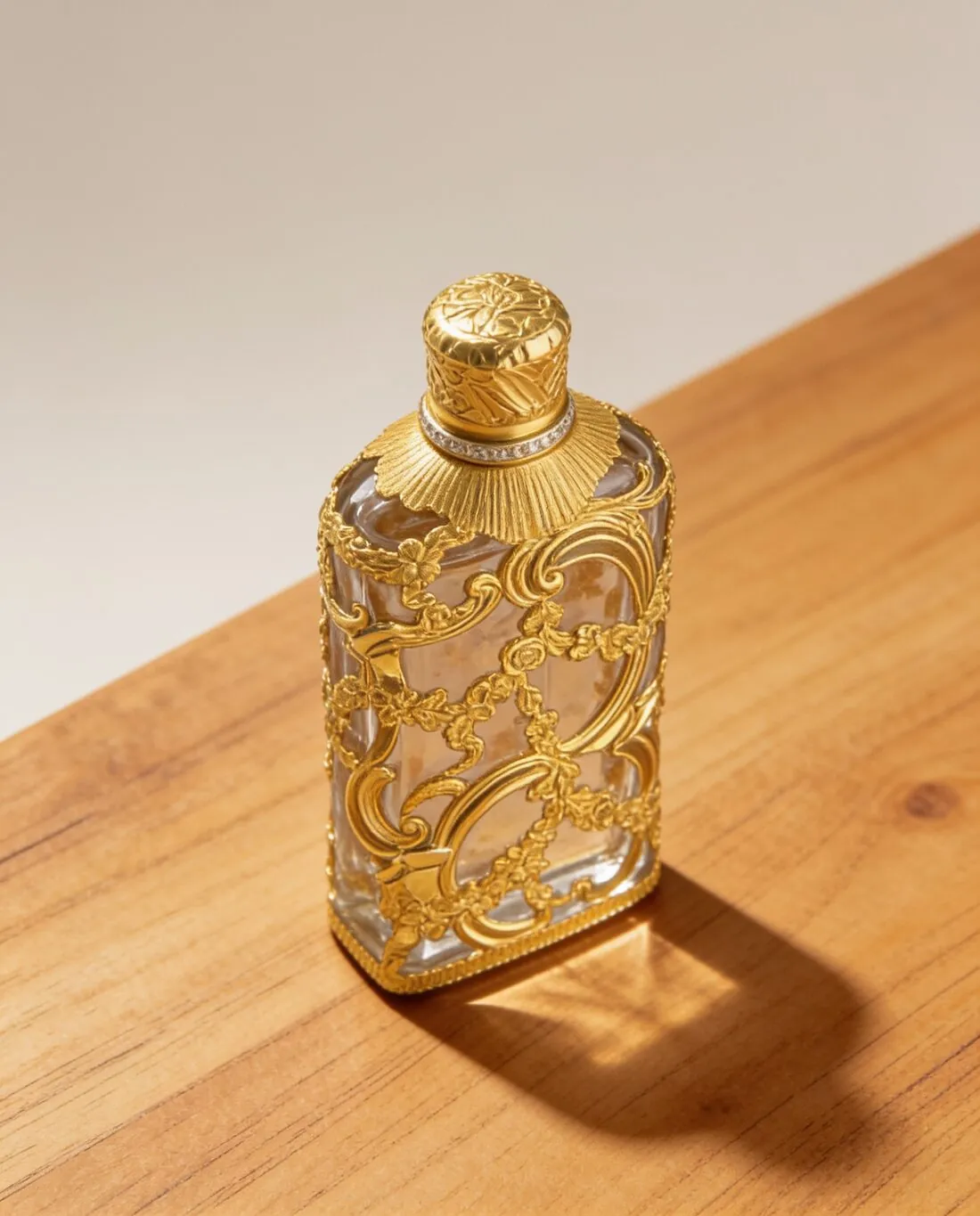
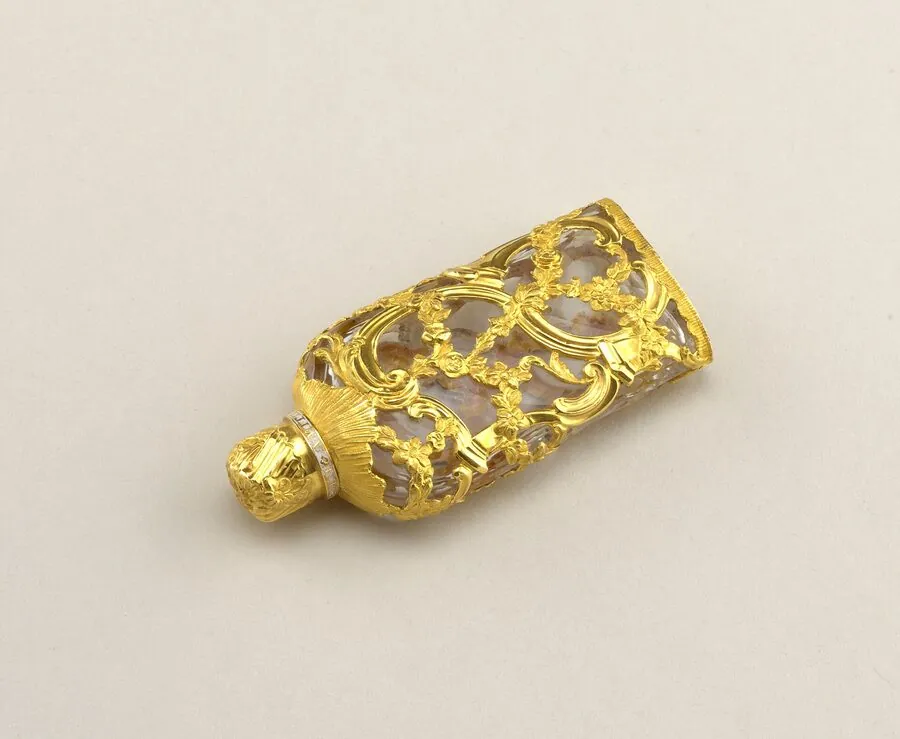
What the top-down angle shows and what it cannot.
- 1
Products that read from above
Flat items show their whole face to a camera overhead: wallets, card holders, caps, a belt coiled once, a scarf folded square, a compact. An open box shows its contents, shoes show lacing and insole as a pair, and jewelry shows the full run of a chain. A tall bottle seen from above is only a cap.
- 2
An angle shows what the photo recorded
The tool works from the product as it appears in the source and is briefed to keep it, not to invent the sides the camera never saw. A front photo of a shoe holds no insole and no lacing from above. For an image from above, the photo has to be taken from above; a second photo from the front serves the other angles.
- 3
The surface fills the frame
From above there is no horizon and no wall, only the surface. Linen, wood or marble then surrounds the product on every side, and its weave, grain or veining lies next to each edge. Look along the outline for places where the pattern meets a thin strap or a chain, and choose a studio ground if the surface competes.
Photographing from above for a top-down image.
- Lay the product on the floor or a low table, stand over it and hold the phone level, parallel to the surface, so that the product does not taper towards one end.
- Stand with the window to one side so that the shadow of the phone and of the arms holding it falls beside the product, and switch the flash off.
- Arrange what belongs together before the shot: shoes side by side as a left and a right, a chain uncrossed, a box open with its lid placed apart.
Top-down product photos, answered.
Can I get a top-down image from a front photo?
A front photo records the front. A view from above built on it would have to show surfaces that were never photographed, and those cannot be added faithfully. Take a second photo from directly overhead and use that one for the top-down image; the result then rests on what the camera saw, and can be compared with the product.
Does a reflection work in a top-down image?
Rarely. A reflection appears below a product that stands on a polished surface and is seen from the front; from directly above, the product covers its own mirror image. The soft shadow is the usual choice from above, a thin rim of shade that lifts a flat item off the ground, and no shadow gives a graphic, cut-out look.
How should a pair of shoes or earrings be laid out?
As a pair, with both pieces whole and a small gap between them. Shoes stand side by side on their soles with the toes pointing the same way, a left and a right; earrings lie level with each other, facing the camera. Pieces that touch or overlap hide part of each other, and what is hidden in the photo cannot be added back faithfully.
How much does it cost?
4 credits per image, plus one credit for 4K. The cost is shown before you generate, and if a job fails the credits are returned. The 20 free credits at sign-up cover 5 images with this tool.
Your next collection, shot this week.
20 credits at sign-up, no card required. Images made with free credits carry a watermark.