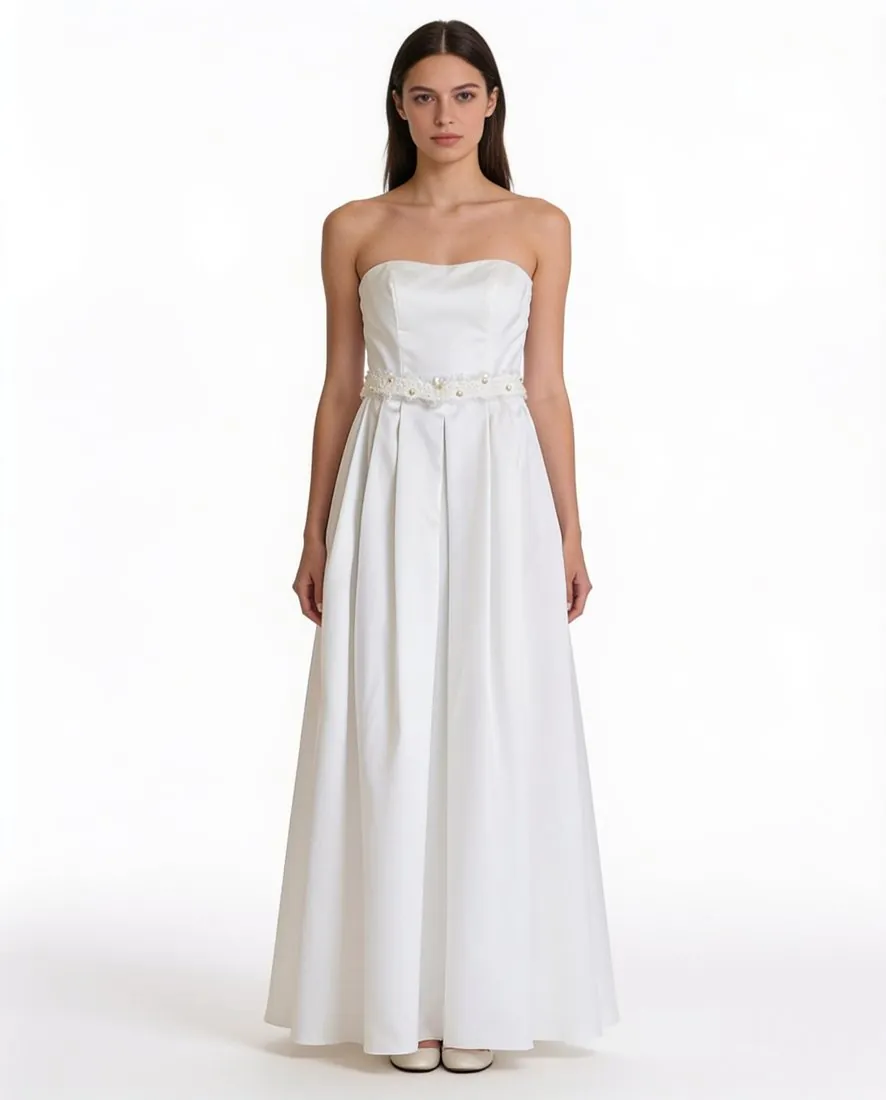
The information a full-length shot carries is length. Where a dress ends against the knee, where trousers break over the shoe and how far a coat reaches can only be judged when the whole figure is in the frame. It also shows a complete outfit, shoes included. For dresses, jumpsuits, coats and trousers it is often the first model view, because a cropped view leaves out the hem the shopper is looking for.
Composition decides whether the proportions are true. A small margin above the head and below the feet keeps the figure whole; feet cut off at the ankle look like a mistake. A camera at the model's eye level makes legs look shorter and shoes smaller, while a camera at about waist or hip height keeps the body in proportion. A phone held close distorts the figure with its wide lens, so the photographer steps back and crops instead.
In a square frame or a small search thumbnail, a full figure is narrow and the garment is a thin strip in the middle. A full-length view of a T-shirt or a necklace therefore wastes most of the frame, and for those products a front crop or a detail shot does more. A tall portrait frame gives a full-length view the most room. Across a collection, keeping the same distance and pose means every model appears the same size in the product grid.