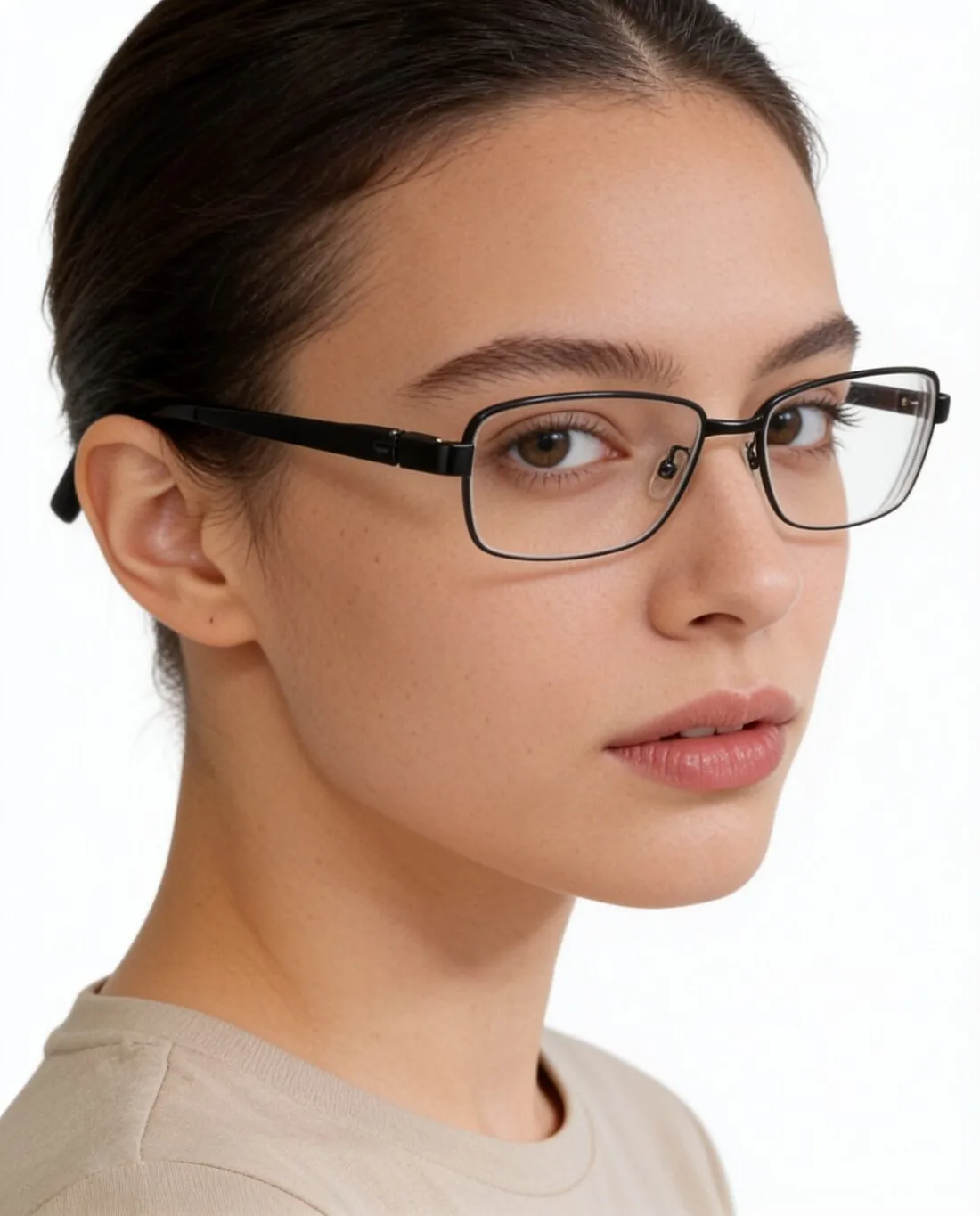
Sunglasses in a close portrait, worn by a model.
With sunglasses the lens is half of the product: its colour, its gradient, its mirror coating. Herofab shows the pair worn in a close portrait and is briefed to keep the tint, the frame colour and the logo on the temple.
The parts of a sunglasses image worth checking.
- 1
Lens tint and gradient
Grey, brown, green, a fade from dark to light, a blue or gold mirror: buyers filter by lens colour. Put the image next to the real pair in daylight and compare the tint, the direction of any gradient and how much of the eye shows through.
- 2
Reflections in the lens
A dark or mirrored lens reflects whatever is in front of it. In the delivered image the reflection should suit the chosen background and light; look for a leftover shape from the room where the source photo was taken, such as a window or a phone.
- 3
Frame, brow bar and temple logo
Acetate thickness, a double bridge, a metal brow bar and the mark printed on the temple or etched in a lens corner define the model. Each of these is briefed to stay as photographed; lettering this small is what to read before anything else.
Photographing sunglasses without the room in the lens.
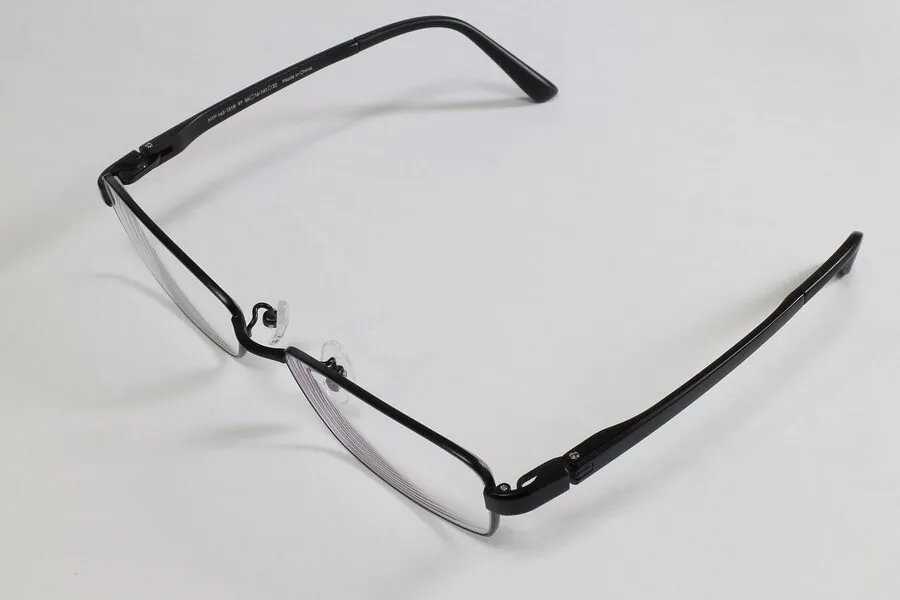
- Stand the sunglasses upright with the lenses facing the camera, not the ceiling, on a matte surface in one colour.
- Tilt the frame slightly until the phone and the hand holding it slide out of the lenses; a sheet of white card opposite the window evens out dark patches.
- Peel demo stickers and hang tags off the lenses and the bridge before shooting, since a sticker covers the very surface the image has to show.
Virtual try-on for sunglasses, answered.
Does a mirrored lens keep its colour?
Herofab is briefed to keep the lens tint and finish as they appear in the upload. A mirror coating shifts colour with the light, so photograph the pair in soft daylight, and compare the lens colour in the result with the product under the same kind of light.
Which scenes suit sunglasses?
Any of the backgrounds can be used: studio white or grey for a catalogue look, or an outdoor setting. The locations include seaside rocks, a wooden pier and a Mediterranean village, with the scene's own light, morning, golden hour or overcast.
Should the eyes show through dark lenses?
That depends on the real lens. A light or gradient tint lets the eye show, a dense or mirrored one does not. The result should match the pair in hand; if a dark lens has turned transparent or a pale one opaque, order a new image and leave that one unpublished.
How much does it cost?
5 credits per image, plus one credit for 4K. The cost is shown before you generate, and if a job fails the credits are returned. The 20 free credits at sign-up cover 4 images with this tool.
Your next collection, shot this week.
20 credits at sign-up, no card required. Images made with free credits carry a watermark.