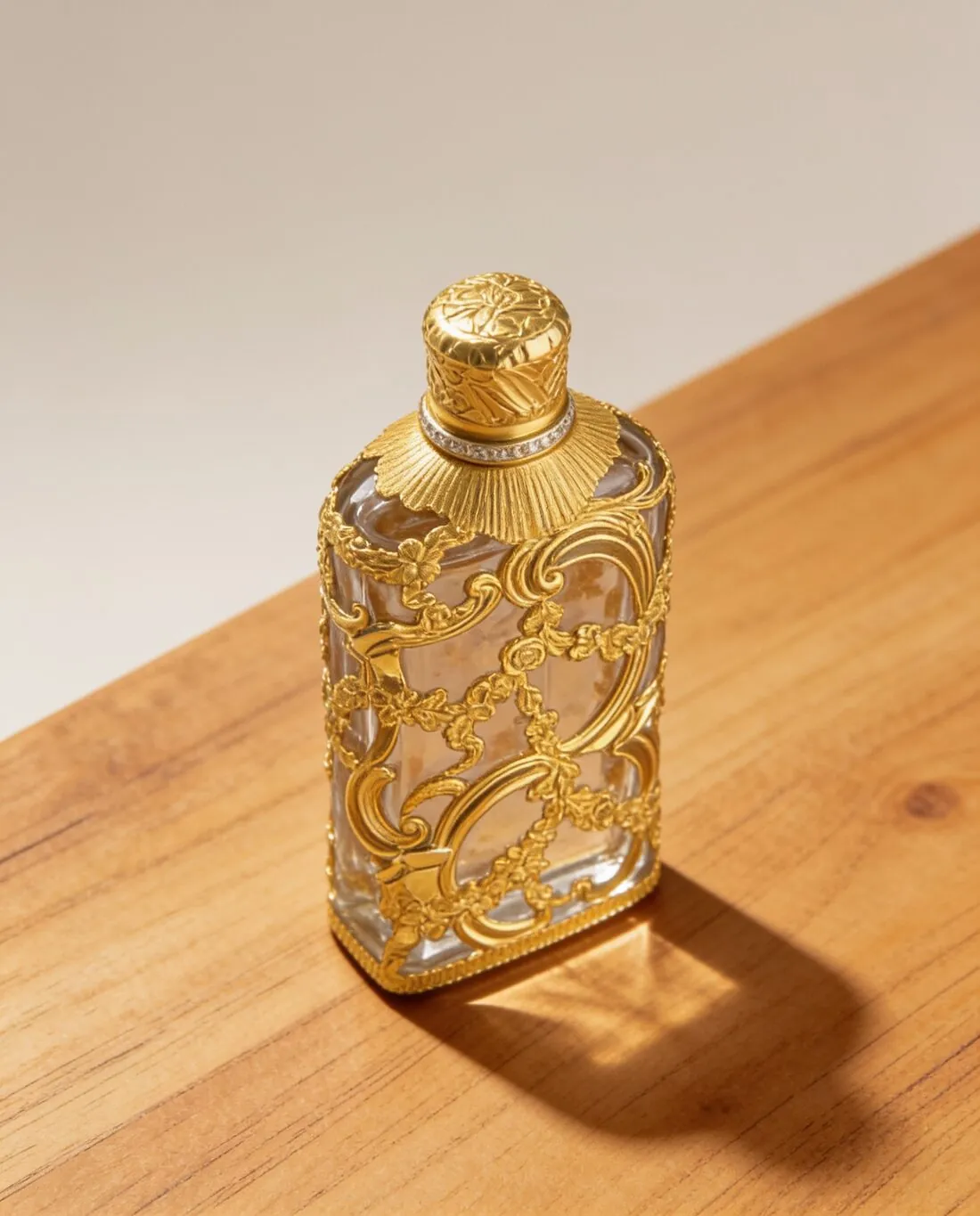
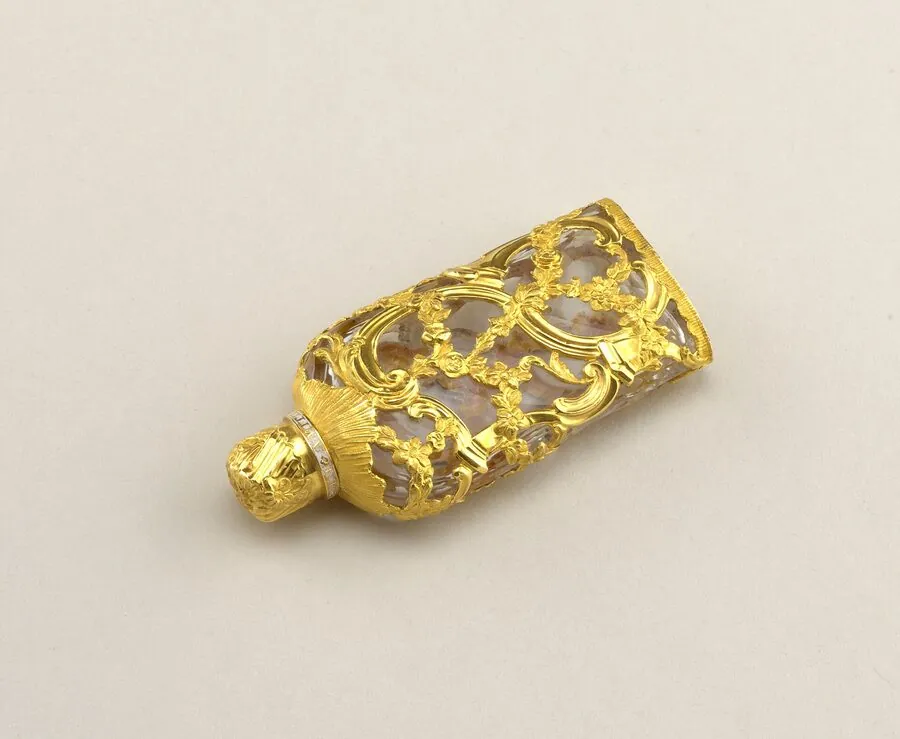
A straight front view shows the face of a product and hides its depth; a side view shows the profile and hides the face. The three-quarter view sits between them and shows both, which is why it is the usual angle for shoes, bags, furniture and boxed products: the toe and the side, the front panel and the gusset, in one image.
On a model, a three-quarter pose turns the body slightly, which shows the side seam, the sleeve and the way a garment falls from the shoulder. It reveals less of a chest print than a front view does, so the two are used together. In a gallery, the three-quarter image normally follows the plain front view.
Turn and height: two angles in one view
The name describes one rotation: the product is turned about halfway between facing the camera and showing its side. A second angle is decided at the same moment and is seldom named, the height of the camera. At the level of the product the view shows two faces; from slightly above it shows a third, the top.
The choice follows the product. A box, a chest of drawers or a suitcase gains from the raised camera, because the top is part of what is sold. A shoe or a handbag is usually photographed from near its own height, since a view from above shortens it and hides the heel or the base.
Perspective and sharpness at an angle
An angled product has a near end and a far end, and a camera exaggerates the difference when it is close. A phone held near a shoe makes the toe swell and the heel shrink. Moving back and using a longer lens, or the tele setting of the phone, restores the proportions, because the distance and not the lens decides perspective.
Depth also tests sharpness. In a front view the whole product lies at one distance; at an angle it stretches away from the camera, and the far end can fall out of focus. A smaller aperture opening or more distance keeps it sharp, and more light is what makes the smaller opening usable. A camera tilted downwards makes upright edges lean towards each other, which is corrected by levelling the camera or in editing.
Repeating the angle across a catalogue
The angle is useful only when it can be repeated. In a studio that means a locked tripod and a mark on the table, or a turntable with a fixed stop, so that every product is turned by the same amount. Without a mark the angle drifts during a long shoot, and the drift shows as soon as the pictures stand in a grid.
Light has to serve two faces at once. The face turned to the main light is bright, and the other falls into shade. A small difference between them gives the product its form; a large one hides the colour and the material of the darker side. A reflector or a second, weaker light on the shaded side controls it.
Three-quarter view and related terms
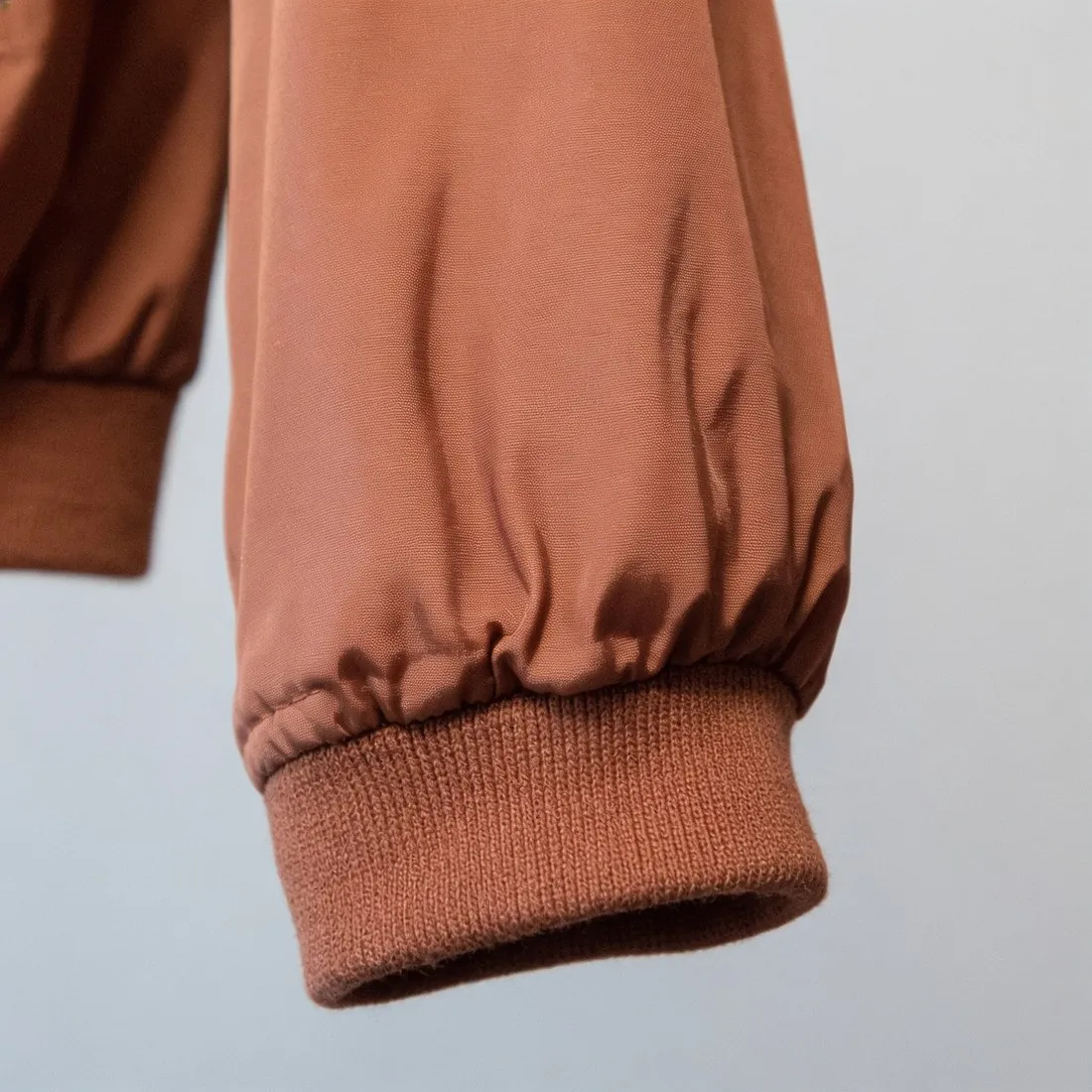 Detail shot
- A detail shot fills the frame with one part of a product and gives up the overview. The three-quarter view keeps the whole product in the frame and adds its depth; it is a view of form, not of finish.
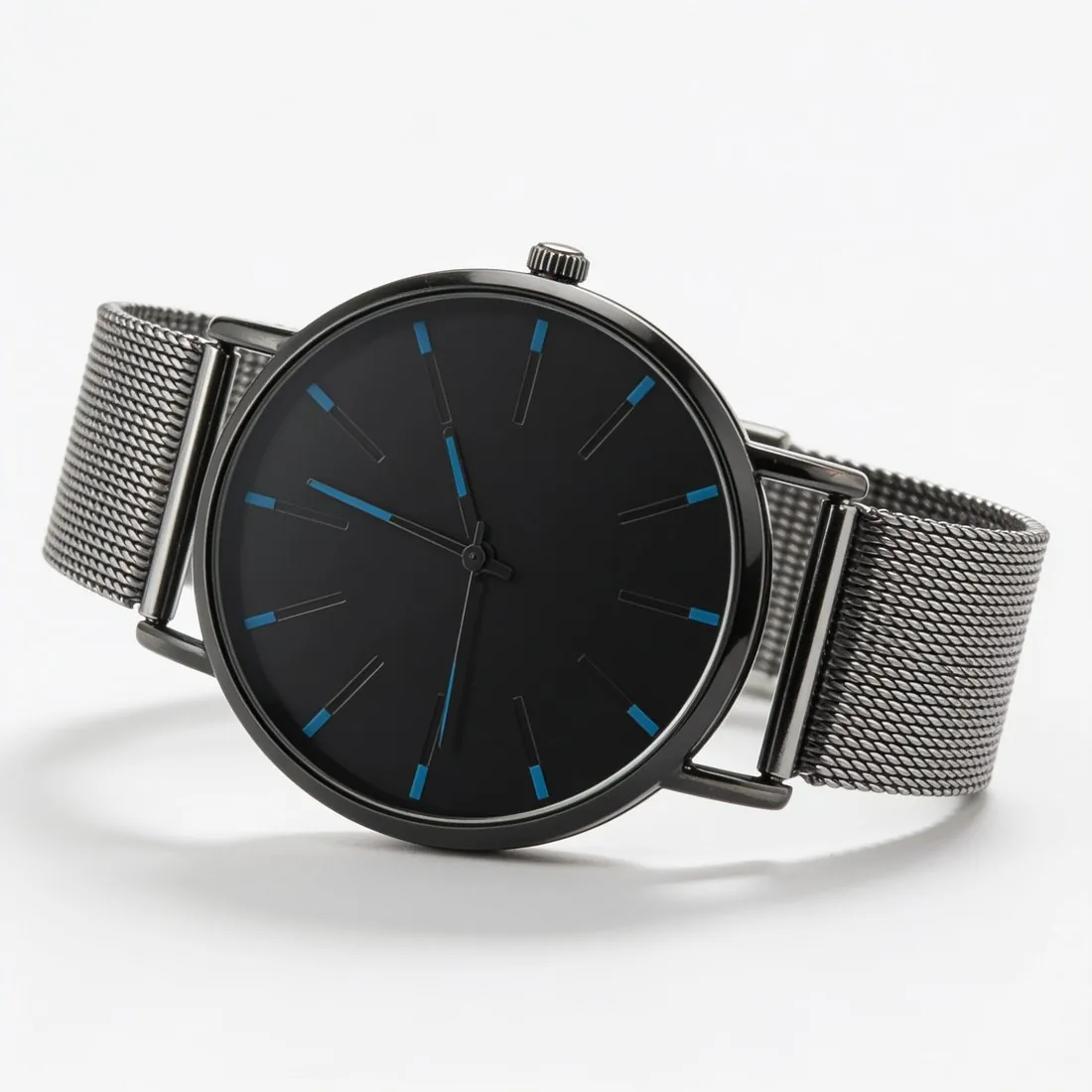 Packshot
- A packshot is a product alone on a plain background, without a model or props. The three-quarter view is one of the angles a packshot can have: the one term names an angle, the other a kind of picture.
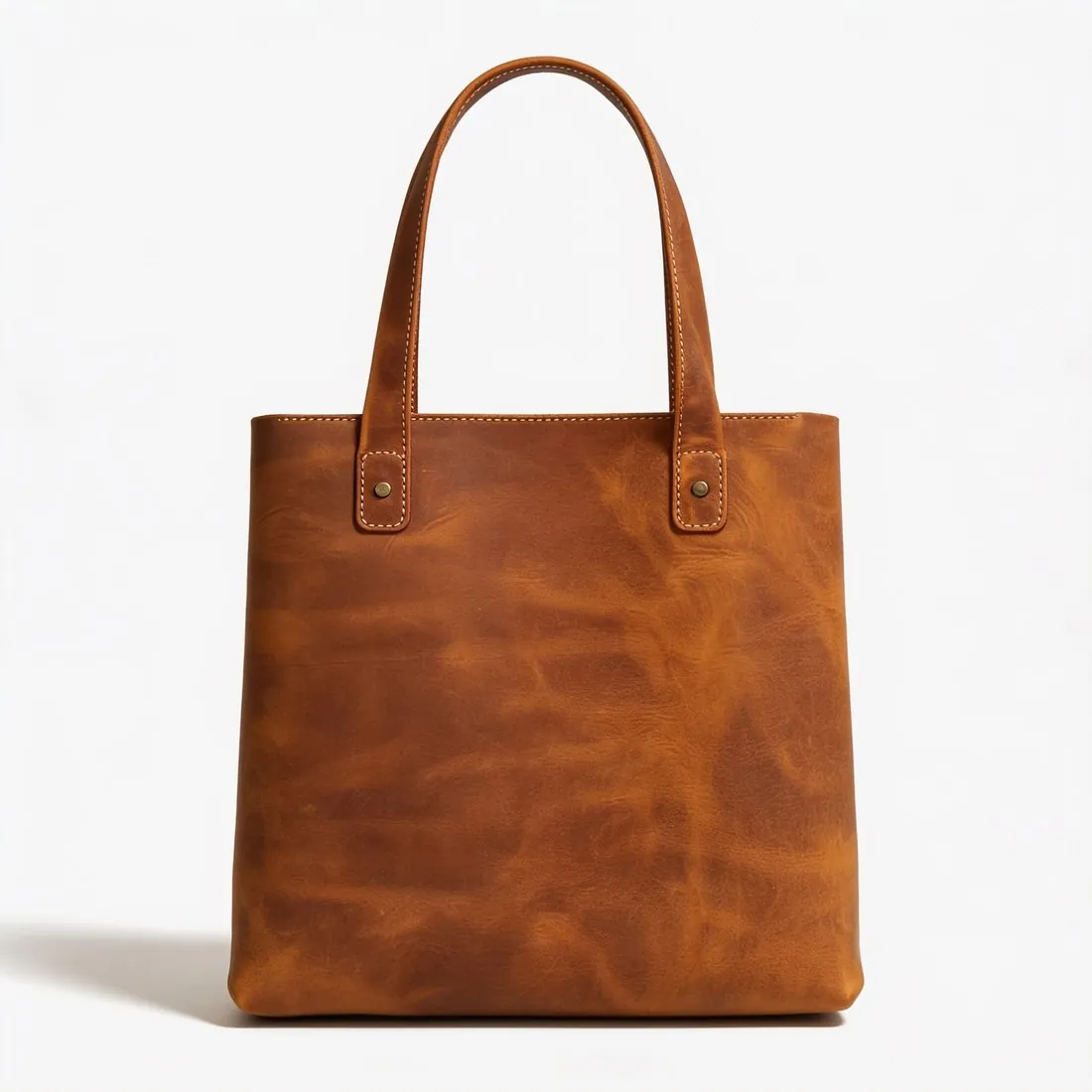 Main image
- The main image is the first picture of a listing and carries the strictest rules. Whether it may be angled depends on the category and on the marketplace, so the three-quarter view is the first image in some listings and the second in others.
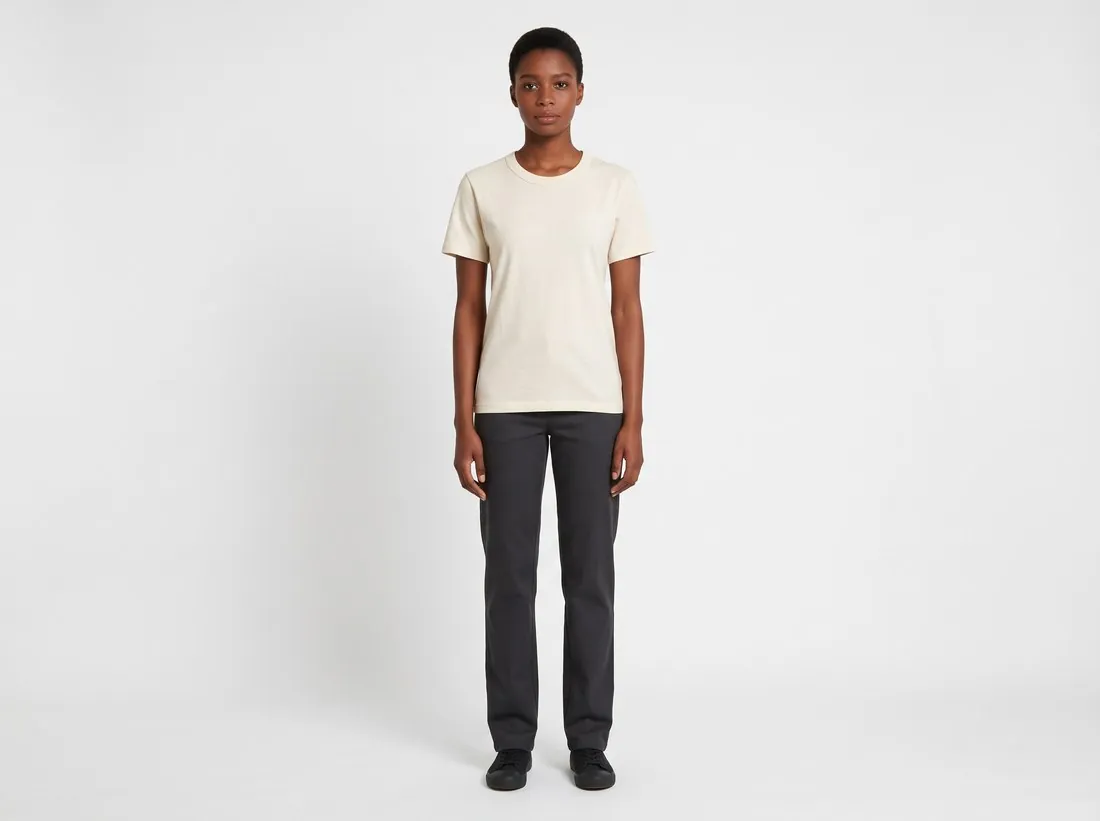 On-model image
- An on-model image shows the product worn by a person. A three-quarter pose is one of its standard variations, in which the body is turned and the side of the garment becomes visible.
A checklist for a three-quarter view
- The front and one side are both clearly readable, and neither is reduced to a thin strip.
- The near end of the product does not look enlarged against the far end.
- The far end of the product is as sharp as the near end, also at full size.
- Upright edges are upright, and the shaded side still shows its colour and its material.
- Every product of the same kind in the catalogue is turned by the same amount and photographed from the same height.